
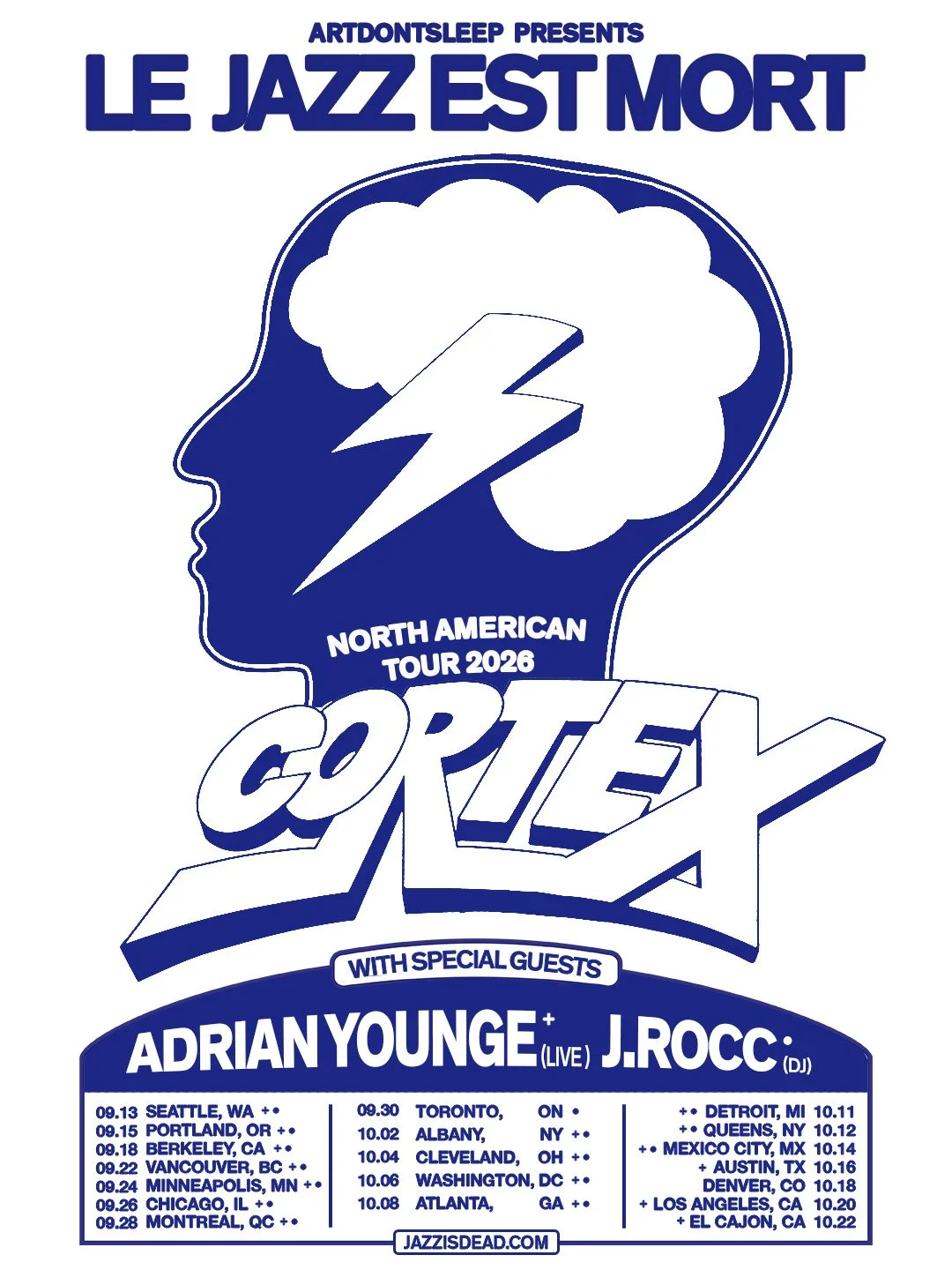
CORTEX - NORTH AMERICAN TOUR 2026
ArtDontSleep is proud to announce the return of Cortex, the legendary French psychedelic jazz-funk group, for Le Jazz Est Mort — a sixteen-city tour across the United States, Canada, and Mexico this September and October.
Founded and led by pianist, composer, and vocalist Alain Mion, recognized as a Gold & Platinum certified songwriter by the National Music Publishers' Association, Cortex carved out a singular place in music history with their innovative fusion of jazz, rock, and funk. Their iconic 1975 album Troupeau Bleu is widely regarded as a masterpiece and became a cornerstone of hip-hop sampling, its timeless grooves reimagined by artists including Tyler TheCreator, MF DOOM, Madlib, Rick Ross, Kanye West, Baby Keem, and Damso. With over 220 documented samples and more than 120 million streams across all platforms, Cortex's influence continues to echo through the jazz and hip-hop communities alike, a living bridge between the golden age of French jazz-funk and the beatmakers of today. On this tour, audiences can expect selections spanning the group's entire career.
In 2024, Cortex played to sold-out audiences across the USA and Canada on a tour organized by Jazz Is Dead, winning over crowds with the group's brilliant current lineup: bassist Mohamed Ouaraz, drummer Victor Dubois, and vocalists Virginie Hombel (vocals/keys) and Sandy Malonga (vocals/synth), alongside Mion himself. Le Jazz Est Mort brings that electrifying live experience to new stages, from the Hollywood Palladium to Massey Hall, from L'Olympia in Montreal to Mexico City, proof that Cortex's creative vision transcends borders and generations.
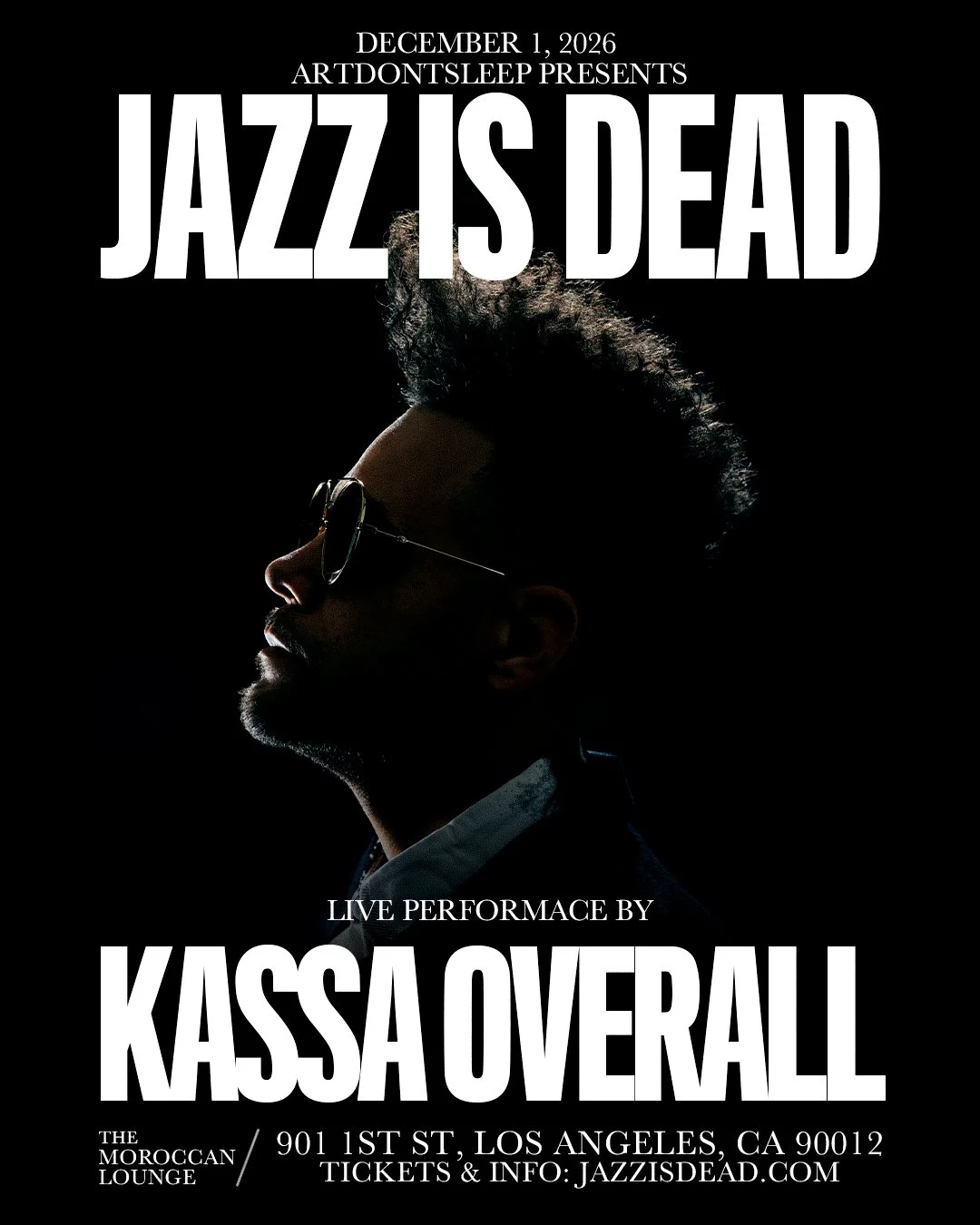
Kassa Overall
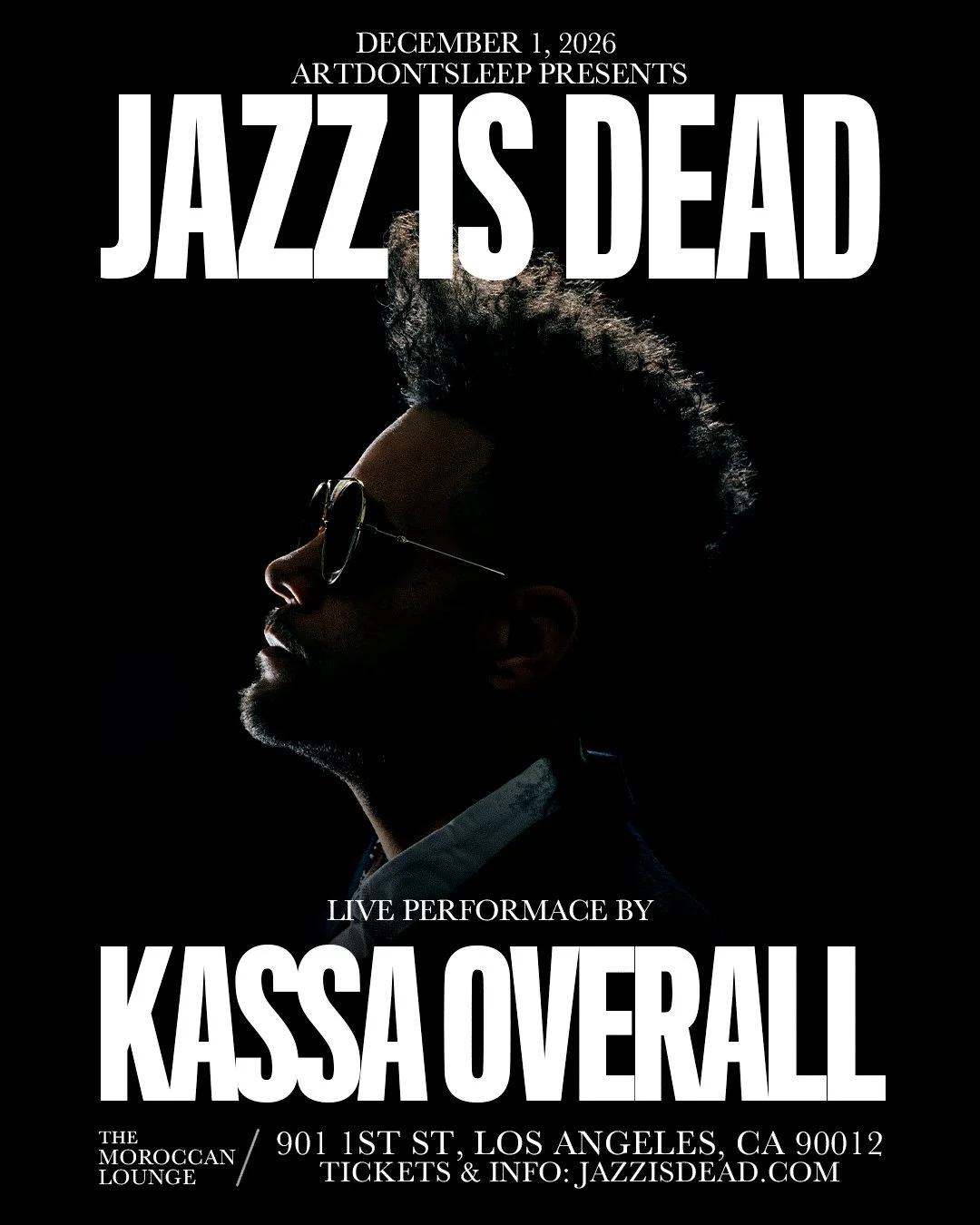
Tickets go live on Friday 07.07.26
If you’re trying to understand the future of jazz, turn your attention to Kassa Overall.
Revered by living icons and underground tastemakers, he began his career behind the drum kit. Raised in Seattle, some of his earliest gigs were at a Starbucks on the corner of 23rd and Jackson, an intersection name-checked in Sir Mix-a-Lot’s “Posse’s on Broadway”, just blocks from Jimi Hendrix’s childhood home and down the street from Garfield High School, an alma mater Kassa shares with Seattle’s black musical pantheon: Jimi, Quincy Jones, and Digable Planets’s Ishmael Butler.
Kassa was raised in the city's South End by parents he describes as a “black bohemian father and a white hippie mother”. One favored Ornette Coleman, the other Bob Dylan. They had met at a live-in spiritual center, pursuing a path of meditation and prayer. Kassa emerged from the womb at home, accompanied by the sounds of tabla drums. After drums came rap music. Early inspirations were DJ Jazzy Jeff and the Fresh Prince (“Parents Just Don’t Understand”) and Public Enemy (“Fight The Power”).
“Our musical creation was always deeply connected to a bigger purpose and a kind of revolutionary tone,” he says. “It was always tied to saying something.”
At the Oberlin Conservatory of Music, Kassa spent his days studying jazz drums and music theory, and his evenings making beats in his dorm room, often staying home from parties to pull all-nighters in front of his MPC, studio monitors, and an open Pro Tools session. At Oberlin, he met musicians who remain his closest musical collaborators to this day. He also met his greatest mentor and north star, Billy “Jabali” Hart, an NEA Jazz Master and veteran of Herbie Hancock’s experimental sextet Mwandishi.
The summer after graduation, he landed a room in NYC, living in bassist-composer Bill Lee’s Fort Greene house, the same house Spike Lee grew up in, for $200 a month. A call from piano legend Geri Allen to play at the Village Vanguard sparked the beginning of his touring career, leading to work as an in-demand sideman with Theo Croker, Jon Batiste, Steve Coleman, Vijay Iyer and Gary Bartz.
Kassa’s groundbreaking solo projects have established him as a driving force on the international stage, fielding support from visionaries including Thom Yorke, Iggy Pop, Virgil Abloh, and more. His first studio album GO GET ICE CREAM AND LISTEN TO JAZZ (2019) bore witness to the emergence of a sound that layered the virtuosic drumming, polyrhythmic rapping, and meticulous production techniques he had honed separately. On I THINK I’M GOOD, released in 2020 on Brownswood Recordings, his voice continued to crystallize, critiquing the injustices of the carceral system, the pharmaceutical industry, and anti-black racism. ANIMALS, released in 2023 on Warp Records, he further showcased the breadth of his, songwriting, production chops and unique rhythmic sensibility, from Roland 808s to abstract, modernist drumming.
From Newport to North Sea, his band has garnered wide acclaim for their live performances, which Gilles Peterson has called “completely surreal”. He has appeared on NPR’s Tiny Desk Concert series and released several critically acclaimed mixtapes.
On CREAM, his fourth solo studio album, Kassa Overall pays homage to the twin passions of his youth — hip-hop and jazz drums in the tradition of Elvin Jones. With this collection of instrumentals, the visionary drummer and producer transforms beloved songs from the 90s and aughts into timeless standards that are rhythmically adventurous, witty, and often sublime.
He is a 2025 recipient of the Doris Duke Foundation Prize.
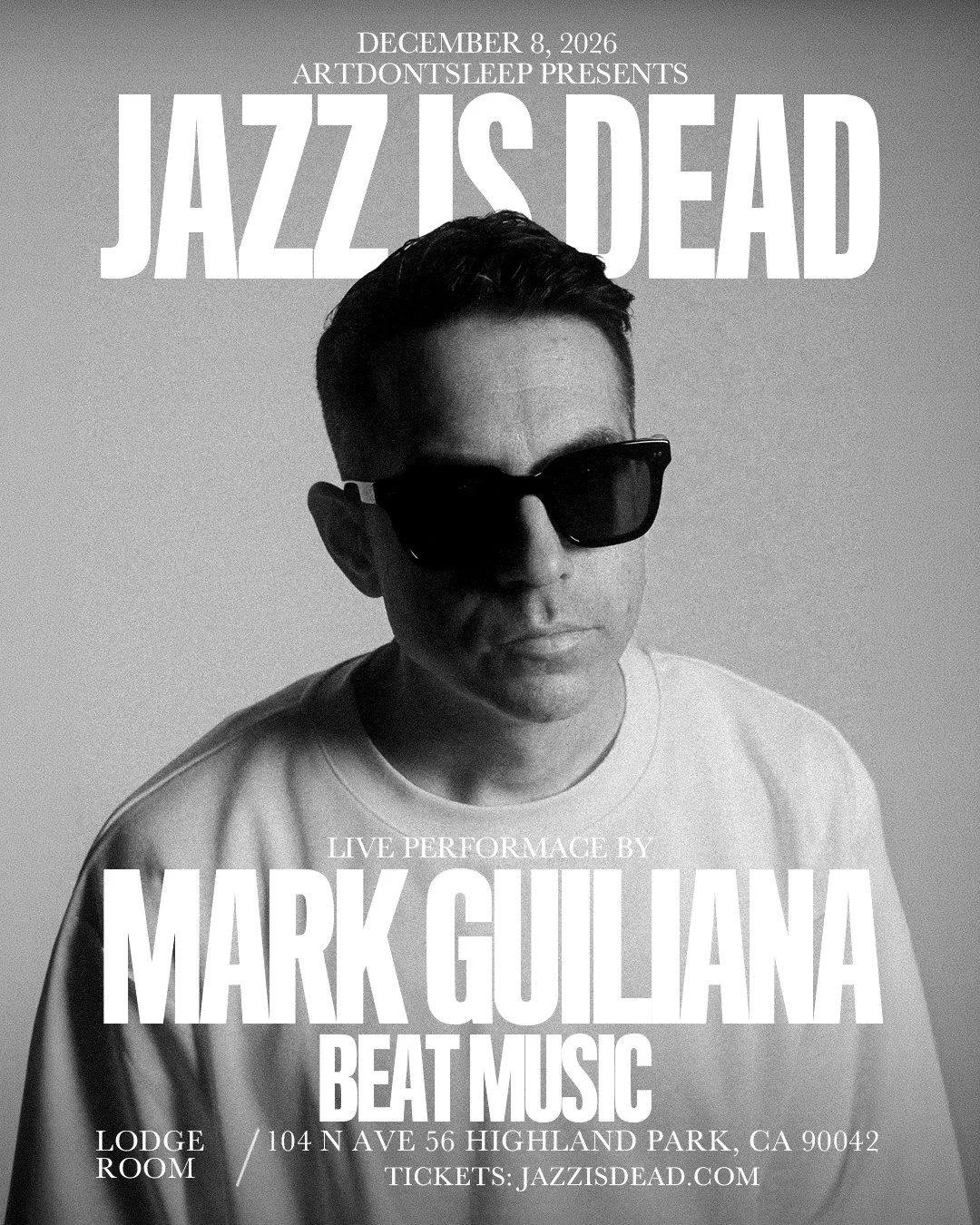
Mark Guiliana
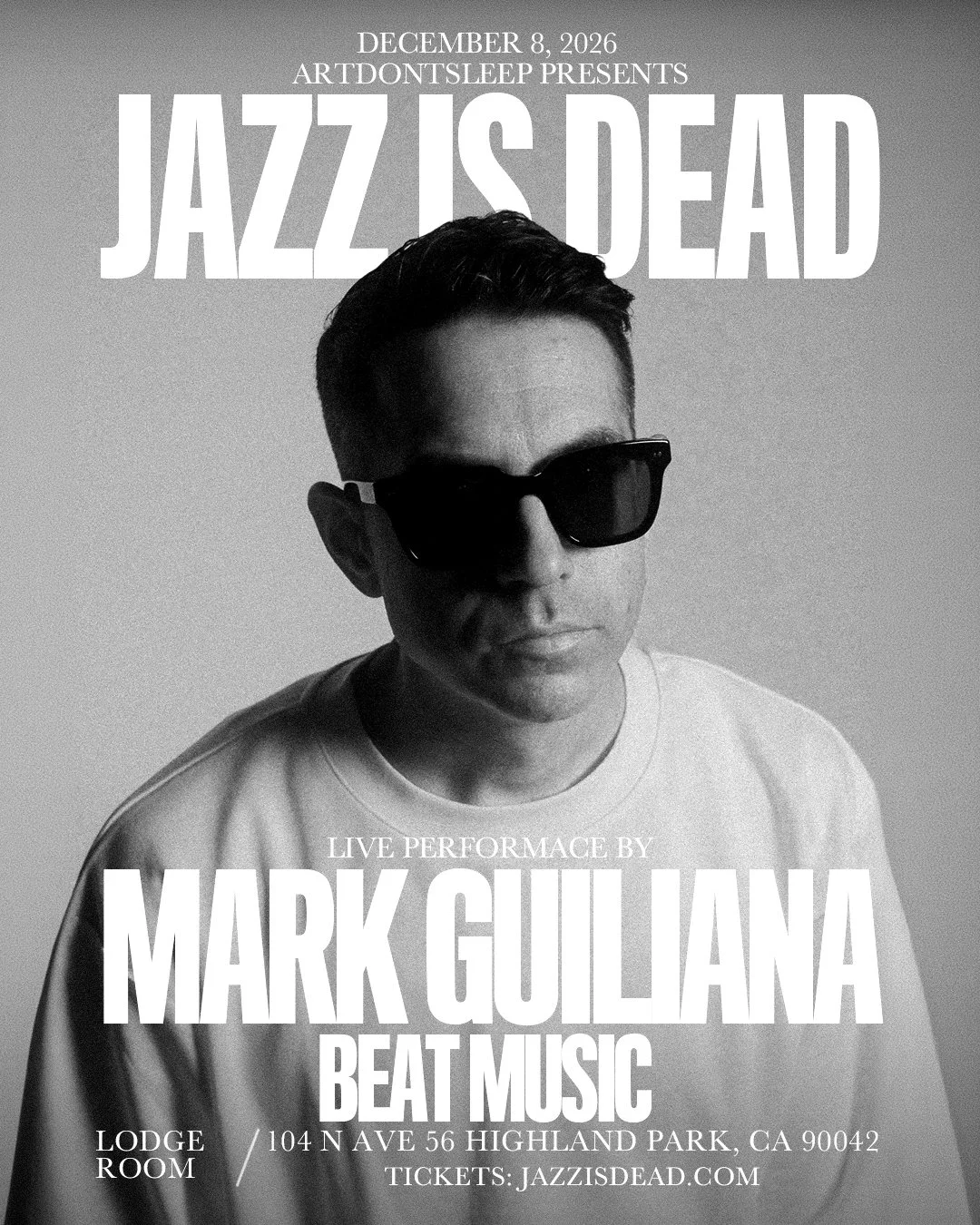
Hailed by The New York Times as “a drummer around whom a cult of admiration has formed,” Grammy-nominated superstar drummer & composer Mark Guiliana brings an adventurous spirit, eclectic palette, and gift for spontaneous invention to a staggering range of styles. Equally virtuosic playing acoustic jazz, boundary-stretching electronic music, or next-level rock, he’s become a key collaborator with such original sonic thinkers as St. Vincent, Matt Cameron (Pearl Jam/Soundgarden), Brad Mehldau, M83, Meshell Ndegeocello, and the late, great David Bowie.
Guiliana’s latest release ‘MARK’, is his first entirely solo work which boldly showcases him as composer, arranger and multi-instrumentalist – performing and layering percussion, piano, synthesizers and more. This new foray into his growing body of renowned work, recorded at Studio 606 in Los Angeles, is a culmination of Guiliana's experiences and inspirations, and at the same time the catalyst of a new direction. 'MARK' follows his first two acclaimed Edition Records albums 'the sound of listening' and 'Mischief'.
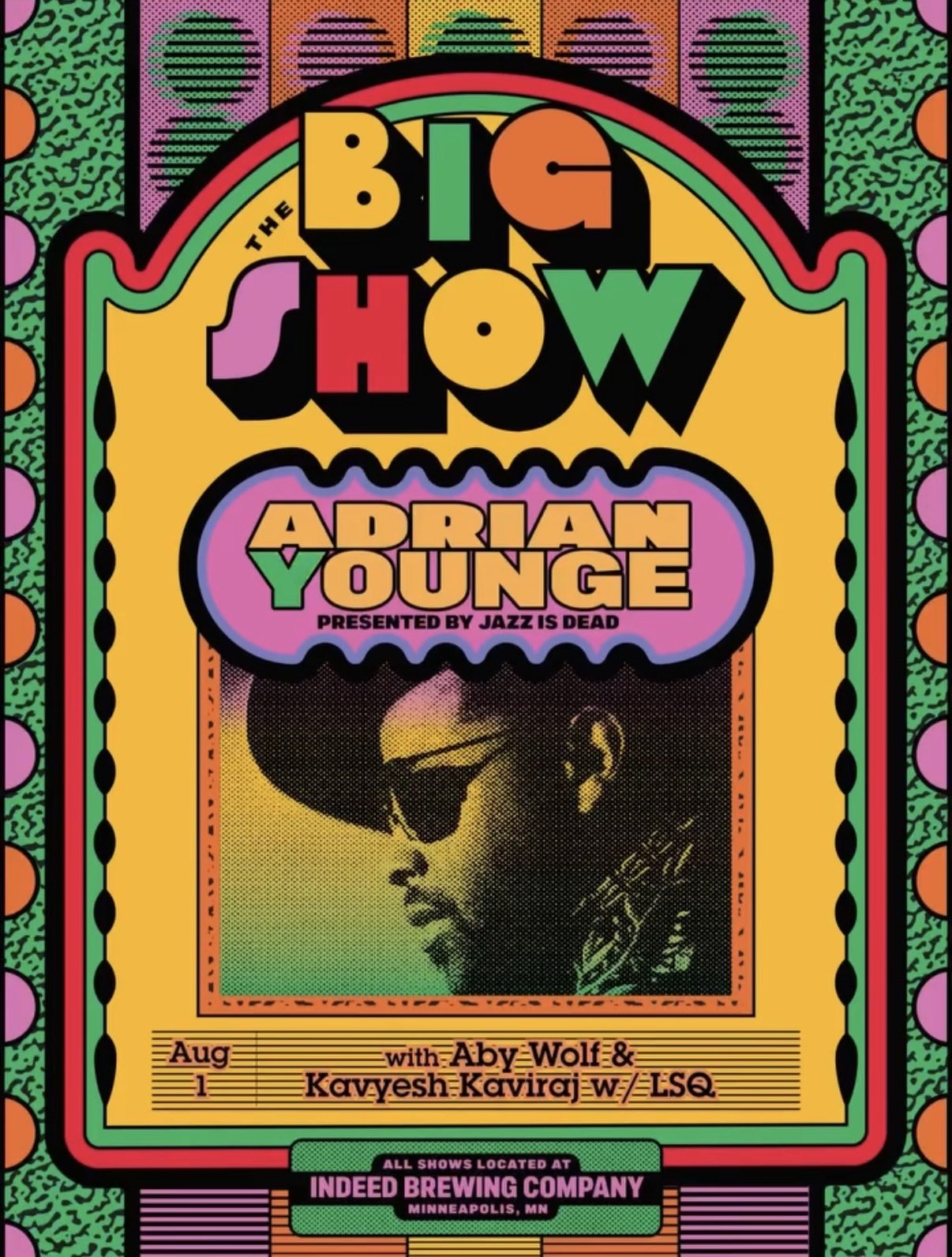
Adrian Younge Live at Indeed Brewing
Jazz is Dead is an analog-forward collective of culture bearers based in Los Angeles with a mission to keep the innovative, rebellious spirit of jazz alive. As they have put it, Jazz is Dead is “not a farewell, but a rallying cry.” Founded in 2017 by Adrian Younge, Ali Shaheed Muhammad (A Tribe Called Quest), Andrew Lojero, and Adam Block, Jazz is Dead has produced records and put on shows with jazz legends such as Roy Ayers, Ebo Taylor, Marcos Valle, Nate Smith, Azymuth, and many more. Over the last decade, they have gained a large online following and more recently become a leading voice in the international movement against AI-generated music.
For this show, one of Jazz is Dead’s founders, Adrian Younge, unveils a new five-piece live ensemble that blurs the line between cosmic soul, hypnotic jazz, and psychedelia—an immersive experience driven by raw drum breaks, fuzz-drenched guitars, rare analog synthesizers, and mood-forward vocals. The new experience unfolds with dangerous momentum, a menacing late-night vision led by Younge alongside soul singer Loren Oden, featuring music from across Younge’s catalog alongside material from his new album, Younge.
Minneapolis’ own, Aby Wolf and Kavyesh Kaviraj, will open, joined by the Laurels String Quartet. This project is a rare reunion of some of the most impressive musical minds in the city that, when brought together, deliver a strikingly beautiful performance blending jazz, classical, and something otherworldly.
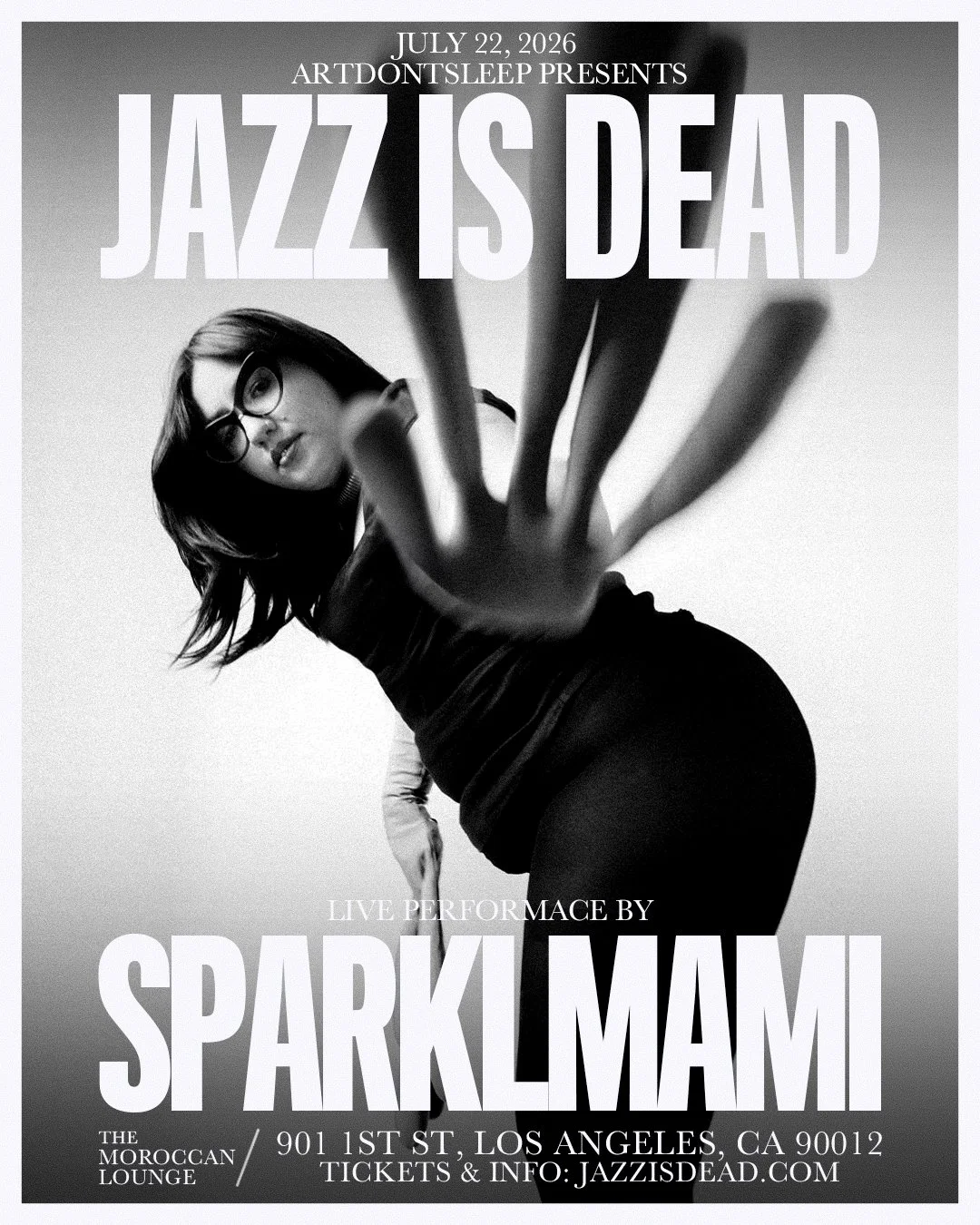
SPARKLMAMI
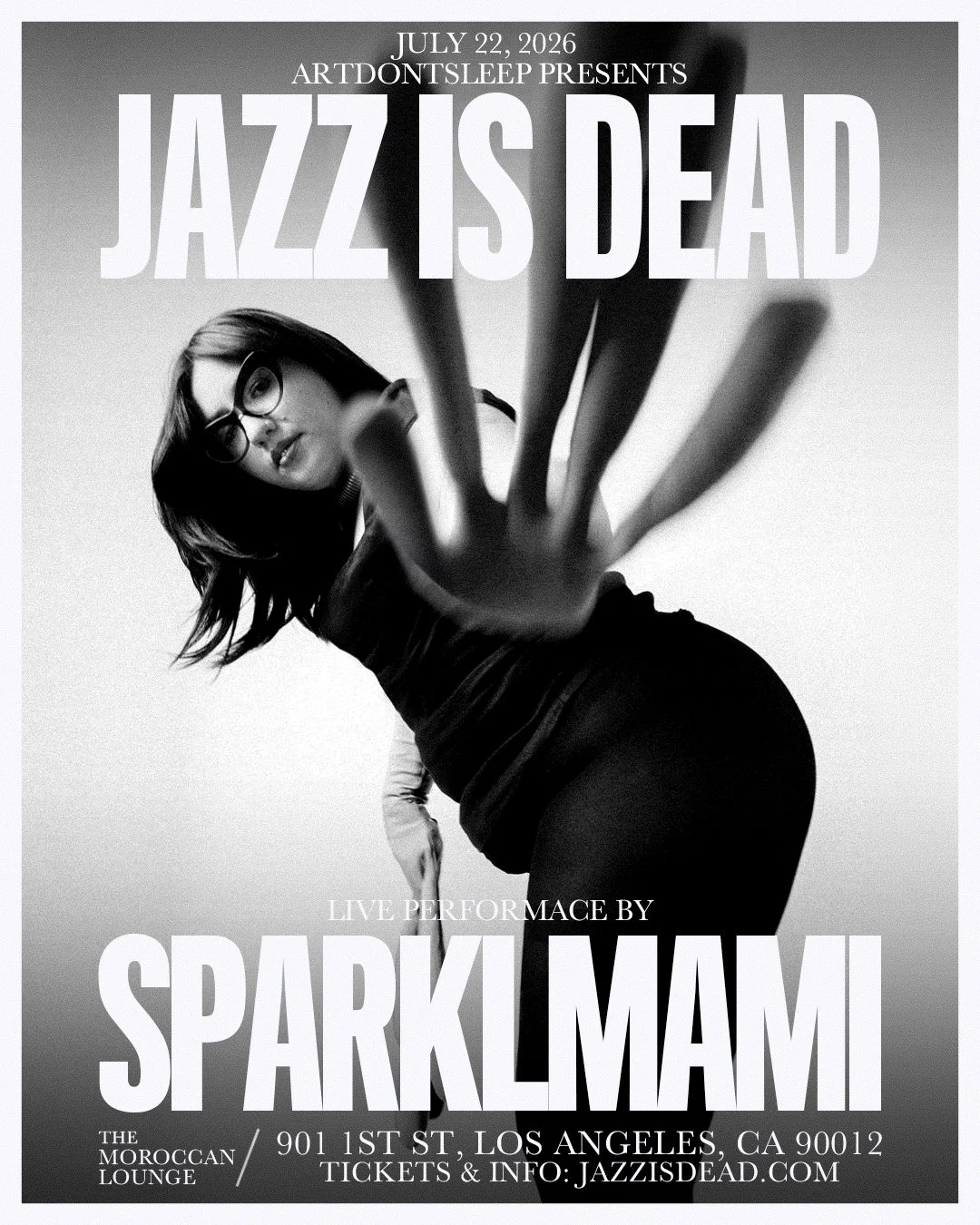
Sparklmami is a Texas-raised, Chicago-based multidisciplinary artist of Mexican and Indian heritage who transcends mediums to build a world untethered to conventional structures. Having grown up singing in church, Sparklmami uses instinctual improvisation reminiscent of Brazilian jazz, experimental soul, Mexican bolero, and funk to express the sentient nature of being. In 2024, she released two breakout singles in anticipation of her debut album In This Body that’s due to arrive in 2025. The album is composed of kaleidoscopic vignettes that tap into her confessional subconscious as Sparklmami explores how our perception of the past shapes our present identity.
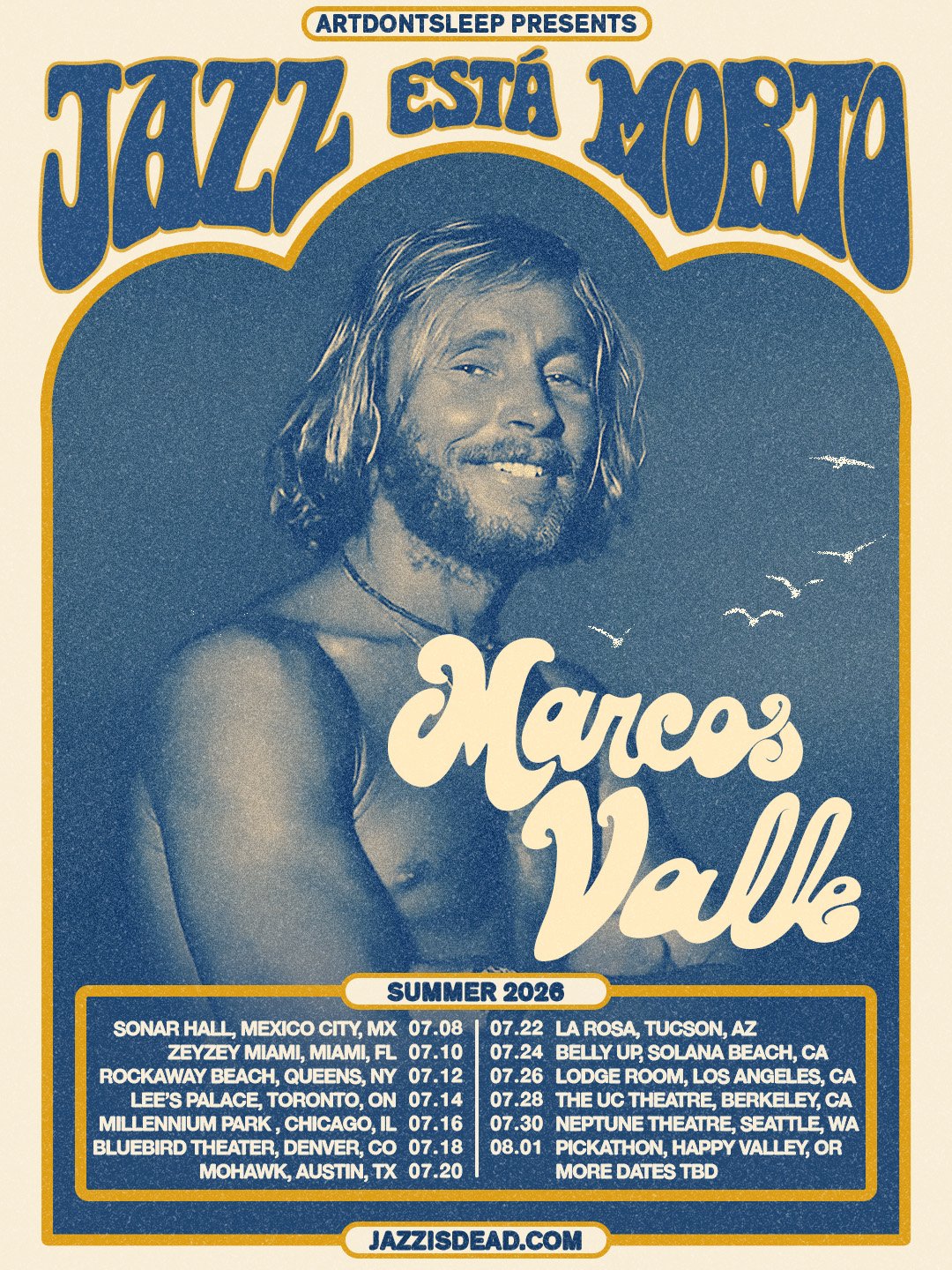
Jazz Está Morto: Marcos Valle Summer Tour
Marcos Valle is the Renaissance man of Brazilian pop, a singer/songwriter/producer who has straddled the music world from the early days of the bossa nova craze well into the fusion-soaked sound of '80s MPB and into the 21st century. His second album, 1965's O Compositor e o Cantor, is widely considered among the era's most important. Its hit single, "Samba de Verão," is one of the most covered songs in Brazilian music history.
Born in Rio de Janeiro in 1943, Valle studied classical music as a child but listened to many different types of music, especially jazz. He began writing songs with his brother Paulo Sérgio; Marcos was the tune writer, Paulo the lyricist. In the early '60s, and after Tamba Triohad a hit with his "Sonho de Maria," Valle was named Brazil's Leading Composer of the Year at the age of 19. A recording contract soon followed, and in 1964 he released his first album, Samba Demais, for EMI Brazil. A tour with Sergio Mendes & Brasil '65 the following year got him his first show business connections in America (via Merv Griffin), and in 1966, Walter Wanderley took Valle's song "So Nice (Summer Samba)" into the U.S. Top 40. Valle soon earned his own American contract, and in 1967, Warner Bros. released the instrumentals album Braziliance! One year later, his Verve debut, Samba '68, became a Brazilian classic thanks to simple, infectious pop songs like "Batucada," "Chup, Chup, I Got Away," and "Crickets Sing for Anamaria" (all of which featured spot-on harmony vocals by his wife Anamaria).
Despite the incredible promise revealed by Samba '68, it was his last American album to date. That same year, the Brazilian-only Viola Enluarada became a big hit in South America, thanks in part to the title track (with vocals by a young Milton Nascimento). The rock & roll era that had already influenced tropicalistas like Os Mutantes, Caetano Veloso, and Gilberto Gil soon began inspiring Valle as well. With albums like the irresistible 1971 classic Garra, he moved away from native Brazilian forms like the bossa nova and samba and into a rock-influenced sound that played up groove-heavy bass and smooth funk even while courting his amazing melodic sense.
During the late '80s, the rare-groove craze centered in London resurrected and relentlessly compiled dozens of crucial, overlooked tracks from the '60s and '70s, including Valle's "Crickets Sing for Anamaria." In 1995, the British Mr. Bongo label released a two-volume series (The Essential Marcos Valle) dedicated to his work. One year later, Valle appeared on the jam session compilation Friends from Rio, and in 1998 he returned with a new album, Nova Bossa Nova. In 2018 Far Outremastered and reissued Nova Bossa Nova in a 20th anniversary edition. In June of 2019 at age 76, Valle released Sempre for Far Out. Its sound was a retro mix of boogie, disco, cosmic samba, and smooth jazz-funk grafted onto socially conscious lyrics that recalled the lyric style of his progressive early-'70s recordings. Guests on the date included Azymuth's bassist Alex Malheiros, trumpeter Jesse Sadoc, and percussionist Armando Marcal.
Valle returned to the studio almost immediately and released Cinzento in March of 2020 for Deck in Brazil and Light in the Attic in the U.S. It featured collaborations with Moreno Veloso ("Redescobrir"), Bem Gil ("Protect Yourself"), Kassin ("Distant Places"), Zélia Duncan ("Rastros Raros"), Domênico Lancelotti ("Pelo Sim, Pelo Não"), and rapper Emicid on the title track. Also appearing that spring, this time from English label Far Out, was a 2020 reissue of Valle's 1972 soundtrack Fly Cruzeiro, for which he was backed by Brazilian jazz-funk fusion trio Azymuth (who took their name from one of his songs) in a set that mixed bossa, samba, synth-driven funk, and jazz fusion.
In 2019, Valle and his wife, singer Patricia Alvi, traveled to Los Angeles to work with Adrian Younge and Ali Shaheed Muhammad for their Jazz Is Dead label project. Though Valle had lived and worked there decades earlier, he had never recorded his own music. Using his catalog as a production guide, collaborators encouraged an album of new songs that crisscrossed his career-long obsessions with samba, bossa, MPB, and psychedelic funk. Valle arrived with a briefcase full of original material; he composed even more on the spot in the recording studio. Using vintage instruments and keyboards, the sessions plotted a 21st century overview of Valle's musical evolution. It included a duet with Alvi on the breezy "Viajando por Aí." In keeping with the Jazz Is Dead label's cataloging aesthetic, the set was titled Marcos Valle JID 003, and issued in August of 2020. A 2021 single saw Valle collaborating with Ivan Lins and Joyce on the gentle "Casa Que Era Minha." ~ John Bush
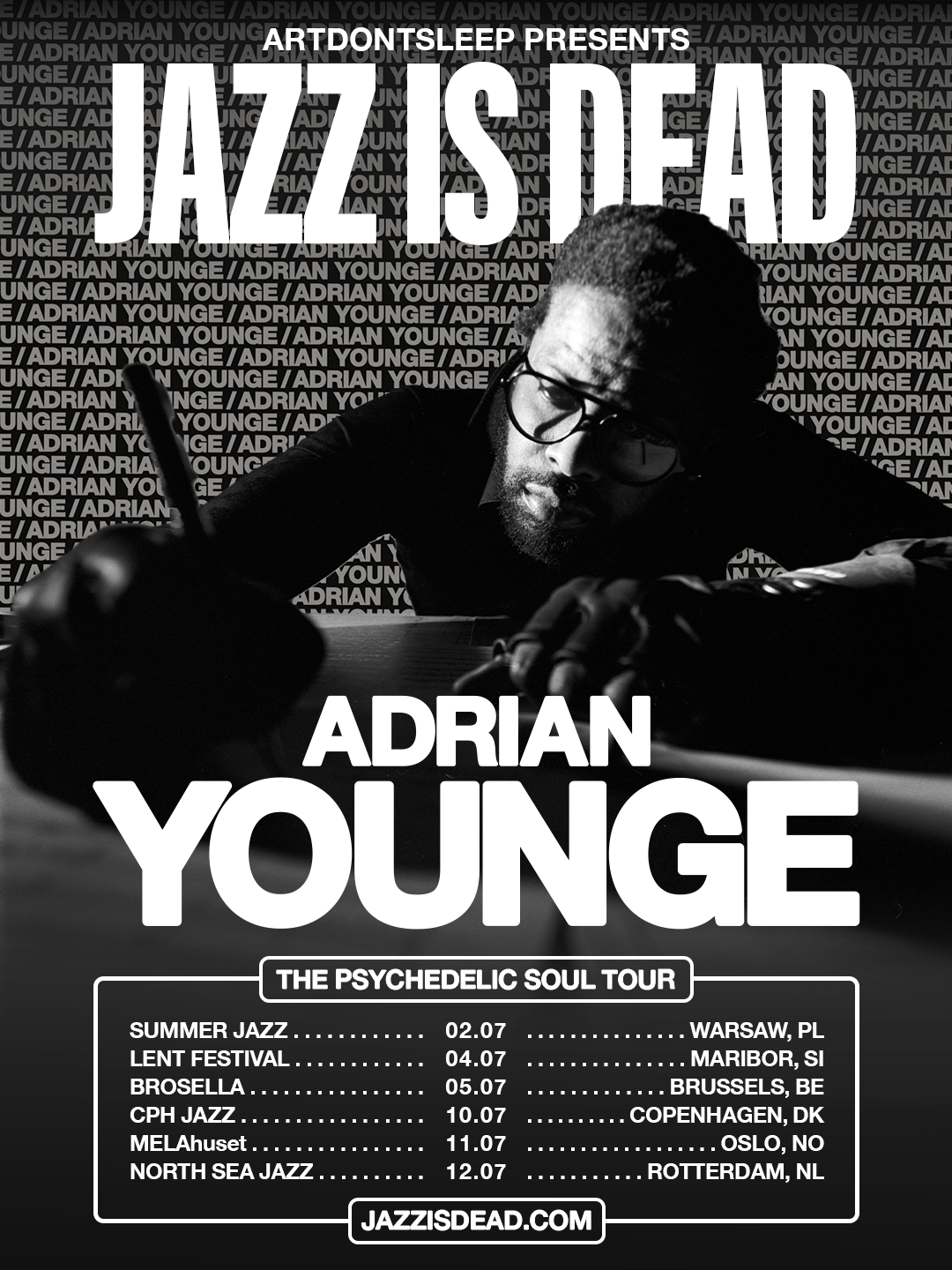
Adrian Younge - The Psychedelic Soul Tour
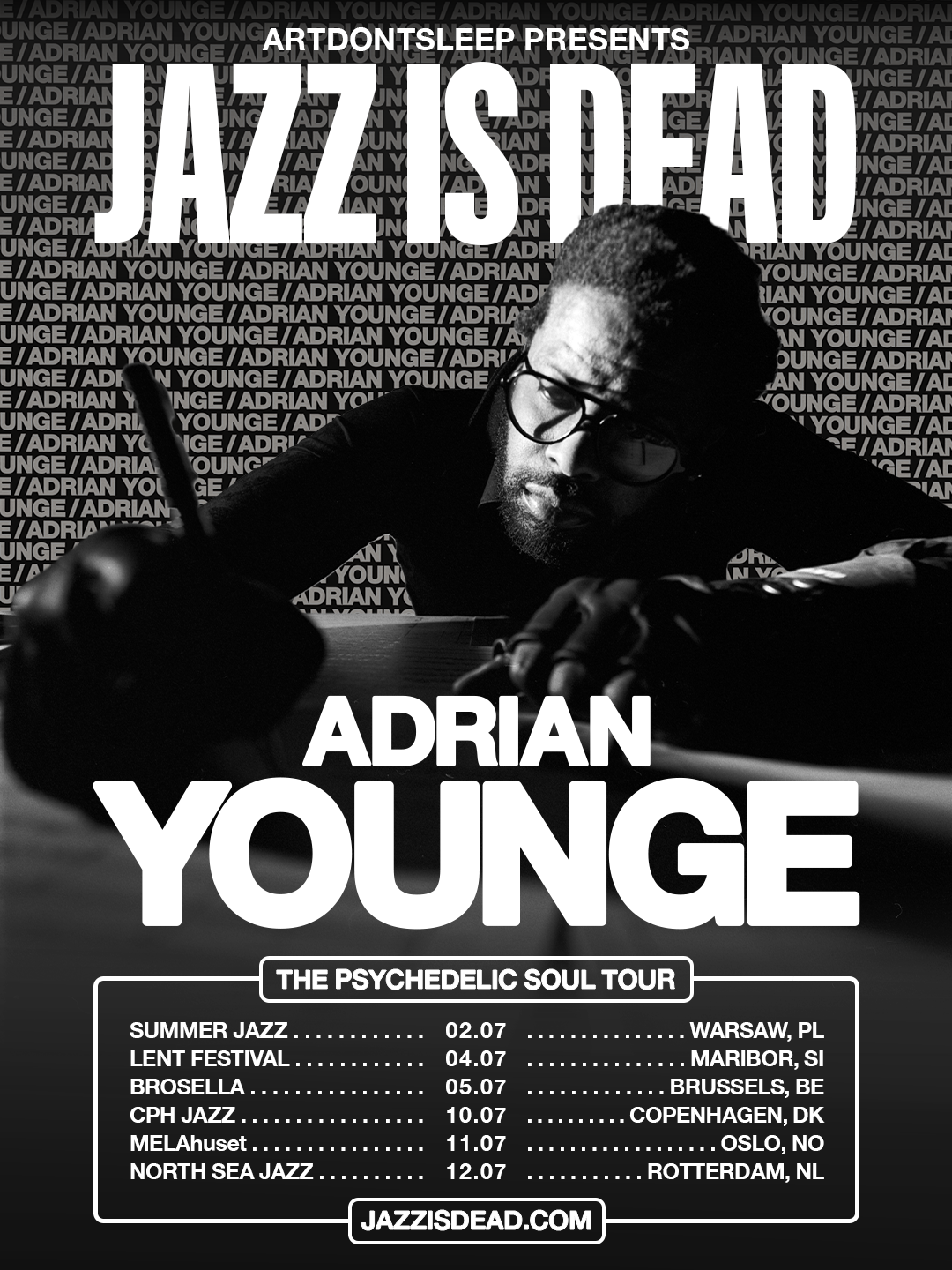
Adrian Younge unveils a new five-piece live ensemble that blurs the line between cosmic soul, hypnotic jazz, and psychedelia—an immersive experience driven by raw drum breaks, fuzz-drenched guitars, rare analog synthesizers, and mood-forward vocals.
The new experience unfolds with dangerous momentum, a menacing late-night vision led by Younge alongside soul singer Loren Oden, featuring music from across Younge’s catalog alongside material from his new album, Younge.
Moving as a single organism, the ensemble fuses improvisation and progressive jazz into a dark, cinematically immersive set—a hallucinatory experience where cosmic soul expands, collides, and pulls the audience deep into a shared nocturnal dream.
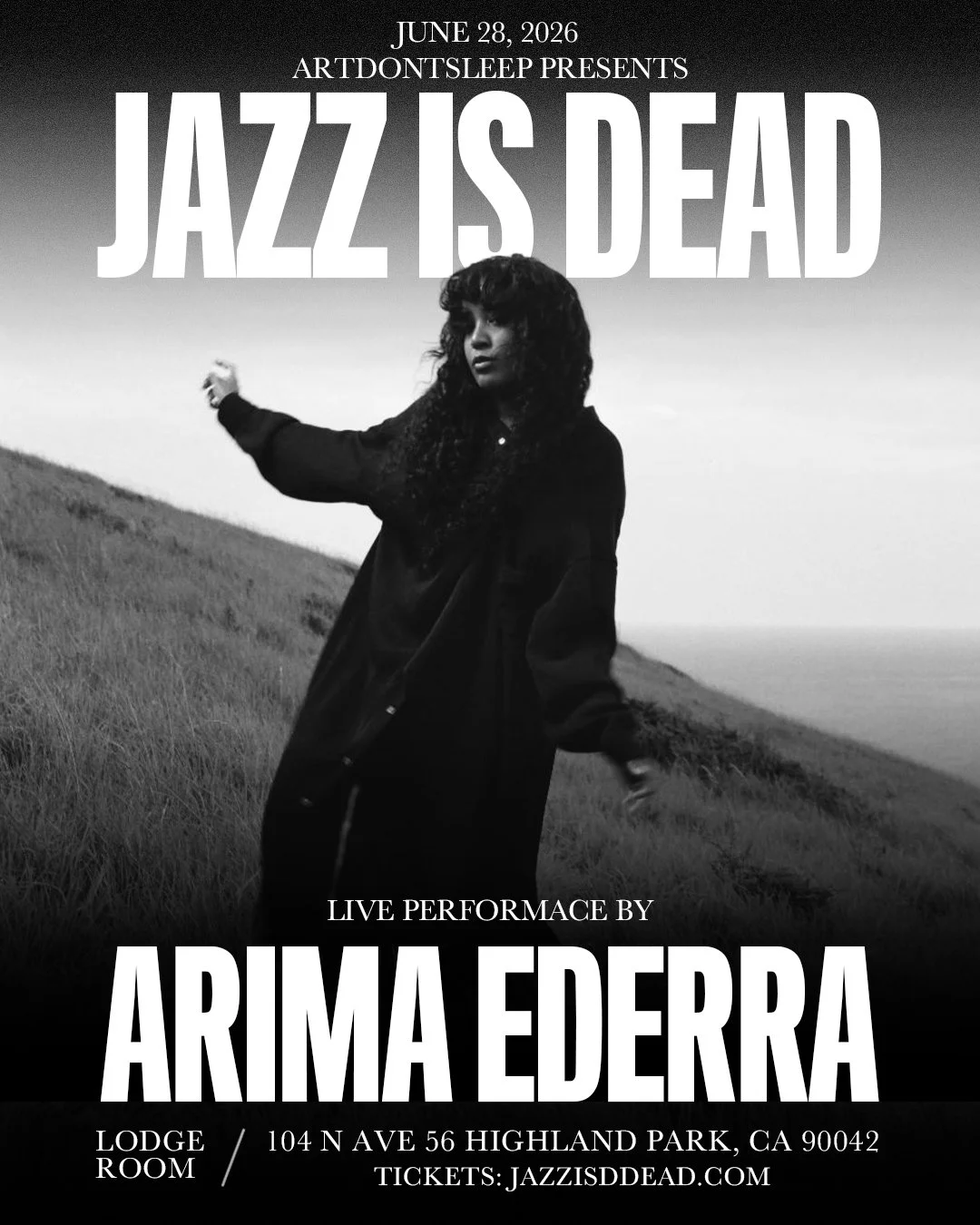
Arima Ederra
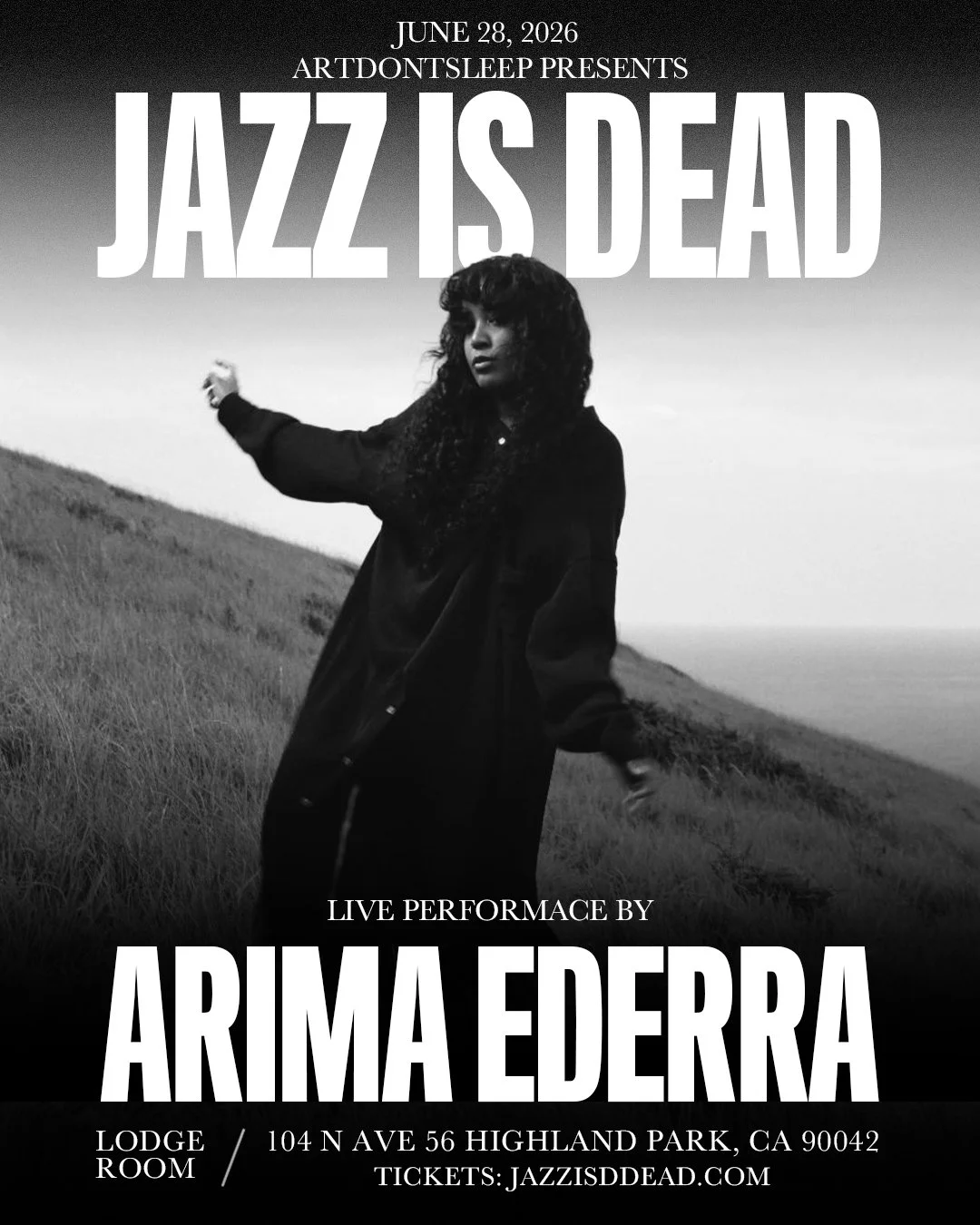
Doors Open: 6PM Show Starts: 7PM
Arima Ederra:
Poetry came first for Arima Ederra, the Los Angeles based singer who’d spent her formative years in Las Vegas. It was there that she first flirted with singing by way of open mics at poetry nights that soon invited her to cover songs from her favorite artists including Bob Marley, Lauryn Hill and Little Dragon. By 2016, she’d moved to Los Angeles and put out Temporary Fixes, an EP of original songs experimenting with her R&B influences on unconventionally structured and textured songs about time and mortality. Her debut LP An Orange Colored Day followed in 2022, a tenderizing meditation on loss and the life that follows heartbreak. Ederra’s honeyed voice singing with childlike curiosity and earnestness gained her fans. The album, largely produced by Ederra and Teo Halm (Rosalía’s “Con Altura”, SZA’s “Open Arms”, Omar Apollo’s “Everygreen”) wove through stories of loss and heartbreak and by the end, she arrives at faith.
In February 2026, the singer-songwriter is set to release her second LP titled A Rush To Nowhere, an invitation over the course of fourteen songs to slow down and experience time without fearing its passing. Ederra wrote ARTN’s songs over the course of two years including on trips away from her LA base recording the album’s songs after she’d returned back home. She reunites with Halm who co-produced much of the album’s fourteen tracks along with Rahm Silverglade. In the project’s first single, “Heard What You Said,” the two create a moody offering moored by a slick synth and a plucky electric guitar. The electric rock architecture suits Ederra’s birdsong vocals just right. Her sound thus far has been less driven by genre as she comfortably travels around soul, R&B, and pop sonic qualities belonging to the Black music tradition to which she belongs and reflective of the singers she admires most including Amel Larrieux and Stevie Wonder. Her musical signature is really an earnestness — her songs stand like one curious question piling on top of the other held by delicious melodies to make songs that swell from reflections to prayers, from diary entries to wide-eyed declarations.
For three months during the writing process, Ederra exclusively listened to Joni Mitchell, Minnie Ripperton, Stevie Wonder and Prince demos. She came out especially inspired by Ripperton’s collaboration with the prolific producer Charles Stepney. The duo encouraged Ederra and Halm, who executive produced the project, to tinker and experiment on ARTN moving from blooming harps on one song to tender piano keys backing a haunting collage of the singer’s voice. Just as captivating is a moment where her whisper grows into a bright belt over a composition of her own soft, humming refrain. Naturally, as Ederra’s songs grow in numbers, they’re also expanding in shape — their depth and structure taking more elaborate forms in service to the feelings she so faithfully metabolizes through her music.
The inquiry grounding Ederra’s new album is the perennial question of time, how it unfurls to spell out our lives, our relationships and their patterns that shape them. “Time was always good to me, don’t know why I was running,” she sings on “In This Life”, A Rush to Nowhere’s second track. Time and memory swirl around the project’s lyrics building a logic Ederra was drawn to about the question time — time as a spiral holding both past, present and future. Temporal delineations collapsed in favor of the way time is felt and experienced. The production services this central inquiry of time. Tracks build and transform with time, at times stopping entirely to take breath before moving along again. Drums beat like a horse’s steady gallop. Vocals overlaid and repeated stretch wide the space of a song.
Visually, Ederra’s representation of her meditations on time take on the qualities of chiaroscuro tableau. In the video for “Heard What You Said,” a long and colorful hallway of memories leads to black and white scenes of abstract allegories. A hand turns a vase holding a lonely flower stem. The singer walks away from a hanging corded telephone. She returns to sing into it: “Did I ever know you? I can’t be sure. I saw a different side, what a difference time shows.”
The rest of ARTN’s visuals follow this tenebristic quality — the colors are moody, almost blue if not black, and the lighting subdued. Clocks appear but they tick and measure time at an anomalous pace. Street scenes speed up and slow down again. Shots are overlapped suggesting some time and space displacement, some experience of a memory superimposed in the present moment. What Ederra accomplishes on A Rush To Nowhere is asking and answering the enduring question of time as the language of our lives and what sweet possibilities appear should we learn to trust time long enough to settle into its vast unknown.



Semana Jazz Is Dead
Alô, amantes do jazz! O Centro Cultural Unimed-BH Minas vai virar um palco para a memória, a música e o legado! 🎞️🍿
A Mostra de Cinema da Semana Jazz Is Dead traz filmes que dialogam com o universo do selo, a cultura e a musicalidade. A exibição dos filmes é gratuita e você vai poder ver, de pertinho, alguns dos astros do jazz e do soul em sessões comentadas.
Arrasta pro lado e confira a programação!
🎬 Semana Jazz is Dead
🗓️ 16 a 22/4 | 🕐 Confira os horários no carrossel
📍 Local: Cinema do Centro Cultural Unimed-BH Minas
🎟️ Entrada gratuita, com distribuição de ingressos 1h antes de cada sessão
____________________________
Hello, jazz lovers! The Unimed-BH Minas Cultural Center is set to become a stage for memory, music, and legacy! 🎞️🍿
The Jazz Is Dead Week Film Showcase presents films that engage with the universe of the record label—its culture and musicality. Film screenings are free of charge, and you’ll have the chance to see some of the stars of jazz and soul up close during moderated sessions.
Swipe right to check out the full schedule!
🎬 Jazz Is Dead Week
🗓️ April 16–22 | 🕐 Check showtimes in the carousel
📍 Location: Cinema at the Unimed-BH Minas Cultural Center
🎟️ Free admission; tickets distributed 1 hour before each screening

ADRIAN YOUNGE & ALI SHAHEED MUHAMMAD LIVE CONCERT TAPING

Jazz Is Dead invites you to an exclusive evening in LA for a defiant celebration of imperfect, authentic human musicianship.
📅 Tuesday, March 24
📍 Lodge Room
⏰ 7 PM
Adrian Younge and Ali Shaheed Muhammad will play an intimate set, reminding us all of the communal power of music played by humans ahead of our launch — the "Played By Humans" certification label, a new standard for the music industry. A declaration and validation of the human experience, process, and organic connections behind the music, Played By Humans is a seal of human authenticity; a rallying point for every musician and fan who believes music without humanity is just sound.
This is a FREE invite-only event. Capacity is limited.
RSVP now to secure your place.
Live concert filming by THE YOUTH.
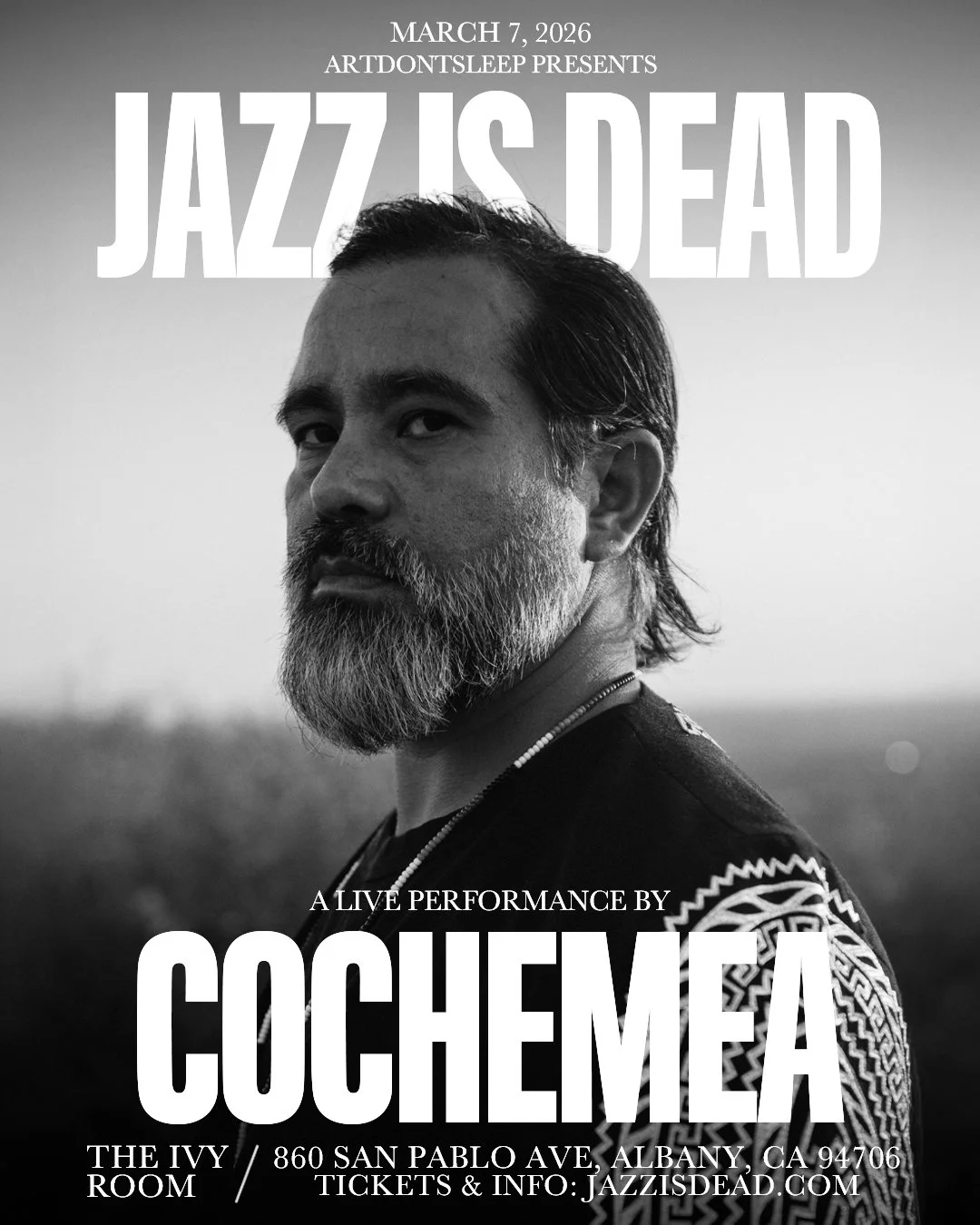
COCHEMEA LIVE IN BERKELEY
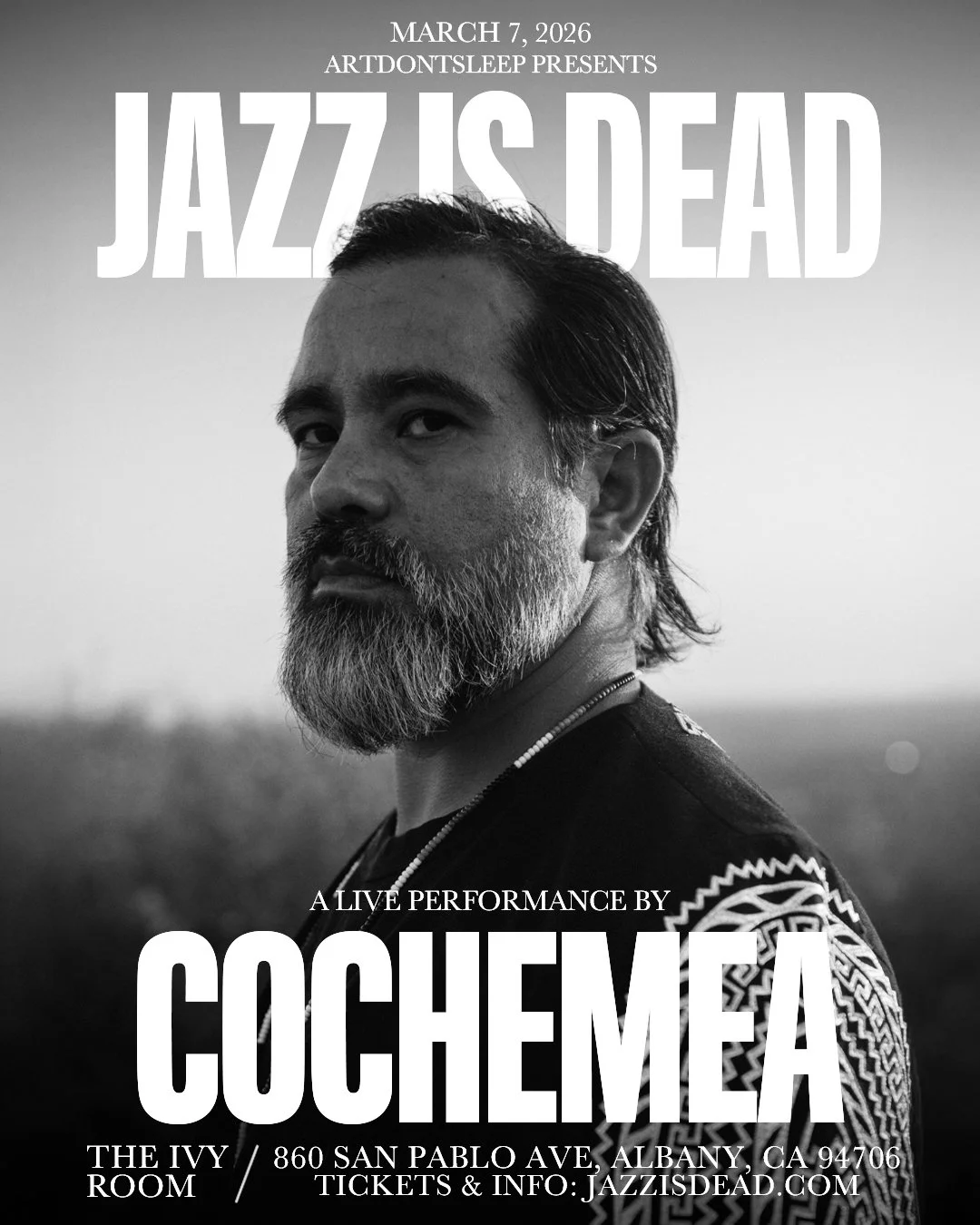
Music is in multi-instrumentalist and composer Cochemea Gastelum’s blood—he comes from a long line of musicians on both sides of his lineage. For over 25 years, Cochemea has built a distinct career as a soloist, section player, and composer/ arranger, collaborating with artists across genres— from his long tenure with Sharon Jones and the Dap- Kings to work with Kevin Morby, Run The Jewels, Jon Batiste, Amy Winehouse, The Roots, Archie Shepp, Mark Ronson, and Quincy Jones, among many others.
His forthcoming album on Daptone Records, Vol. 3: Ancestros Futuros, is the third volume in a series that includes All My Relations (2019) and Vol. 2: Baca Sewa (2021). Across his body of work, Cochemea interweaves the past, present, and future, engaging with time as speculative history— one that moves fluidly between memory and possibility.
For Vol. 3: Ancestros Futuros, he gathered a core group of longtime collaborators—a powerhouse octet of New York City percussionists and members of Daptone’s famed rhythm section. Gabriel Roth (aka Bosco Mann) returned as producer and mixing engineer, capturing the band live to 8-track analog tape. Accompanied by a 9-minute film mixed in Dolby Atmos, this volume also marks Cochemea’s evolution into visual storytelling.
Cochemea’s previous releases have been praised by DJs and critics alike. His Daptone debut, All My Relations, was a family reunion of sorts, uniting spirits, musicians, and melodies across time and place. Leading a nine-piece ensemble, he recombined ancient elements— drums, winds, and voice—into a deeply personal meditation on the interconnection of all things. Vol. 2: Baca Sewa directed this exploration into the archives of family history, mythology, and the cultural imaginary. Pitchfork called All My Relations “equal parts spiritual journey and irrepressible funk.” Mojo awarded the album four stars, noting “its message of harmony and oneness is universal,” while Downbeat described Vol. 2: Baca Sewa as “radiating like a flower from beginning to end.”
Vol. 3: Ancestros Futuros is anchored in the cultural fabric that has nurtured Cochemea from the beginning. A California native of Yaqui ancestry, Cochemea describes a central part of his work as “accessing ancestral memory that comes in different forms—sometimes when you visit a place, sometimes in dreams... it’s in our DNA. For me, it’s about seeking wholeness in these zones of fracture.”
Dreams play a vital role in his creative process. “A lot of melodies come to me through dreams,” he shares. “I’ve kept a record of them for years, shaping the language into dream scores as foundations for compositions that connect the conscious and unconscious realm.” One such score appears on the back cover of Ancestros Futuros, reflecting the intuitive and layered nature of his work. This dream- guided approach informs the album’s opening track, Transmisión del Soñar, which serves as a portalbetween dimensions.
The album is also shaped by stories of survival and resistance. The title track, Ancestros Futuros, draws from a story of a Yaqui midwife who would bury the navels of newborns in the ground so that future generations would rise and reclaim the land. “I was thinking about survival as a continuum connecting past and future generations,” Cochemea explains, a theme that echoes throughout his compositions.
Cochemea’s musical and spiritual synthesis is made possible through his reverence for the horn and the music and traditions that precede him. His distinct voice as a saxophonist and flutist places him within a lineage of players who honor the past while blending dexterity with invention. Inspired by heroes like Eddie Harris, Yusef Lateef, Jim Pepper, and Gato Barbieri, he coaxes his instruments into intimate and expressive realms, bridging ancestral rhythmic traditions with forward- looking vision, creating a signature sound that is both deeply rooted and expansive.
Vol. 3: Ancestros Futuros finds Cochemea building worlds of sound, blending past, present, and future into a ritual offering —an evolving sonic fiction carried across space-time, where memory, survival, and imagination converge.

COCHEMEA LIVE IN LA

Tickets will be available for sale on Friday, November 14, 2025.
Music is in multi-instrumentalist and composer Cochemea Gastelum’s blood—he comes from a long line of musicians on both sides of his lineage. For over 25 years, Cochemea has built a distinct career as a soloist, section player, and composer/ arranger, collaborating with artists across genres— from his long tenure with Sharon Jones and the Dap- Kings to work with Kevin Morby, Run The Jewels, Jon Batiste, Amy Winehouse, The Roots, Archie Shepp, Mark Ronson, and Quincy Jones, among many others.
His forthcoming album on Daptone Records, Vol. 3: Ancestros Futuros, is the third volume in a series that includes All My Relations (2019) and Vol. 2: Baca Sewa (2021). Across his body of work, Cochemea interweaves the past, present, and future, engaging with time as speculative history— one that moves fluidly between memory and possibility.
For Vol. 3: Ancestros Futuros, he gathered a core group of longtime collaborators—a powerhouse octet of New York City percussionists and members of Daptone’s famed rhythm section. Gabriel Roth (aka Bosco Mann) returned as producer and mixing engineer, capturing the band live to 8-track analog tape. Accompanied by a 9-minute film mixed in Dolby Atmos, this volume also marks Cochemea’s evolution into visual storytelling.
Cochemea’s previous releases have been praised by DJs and critics alike. His Daptone debut, All My Relations, was a family reunion of sorts, uniting spirits, musicians, and melodies across time and place. Leading a nine-piece ensemble, he recombined ancient elements— drums, winds, and voice—into a deeply personal meditation on the interconnection of all things. Vol. 2: Baca Sewa directed this exploration into the archives of family history, mythology, and the cultural imaginary. Pitchfork called All My Relations “equal parts spiritual journey and irrepressible funk.” Mojo awarded the album four stars, noting “its message of harmony and oneness is universal,” while Downbeat described Vol. 2: Baca Sewa as “radiating like a flower from beginning to end.”
Vol. 3: Ancestros Futuros is anchored in the cultural fabric that has nurtured Cochemea from the beginning. A California native of Yaqui ancestry, Cochemea describes a central part of his work as “accessing ancestral memory that comes in different forms—sometimes when you visit a place, sometimes in dreams... it’s in our DNA. For me, it’s about seeking wholeness in these zones of fracture.”
Dreams play a vital role in his creative process. “A lot of melodies come to me through dreams,” he shares. “I’ve kept a record of them for years, shaping the language into dream scores as foundations for compositions that connect the conscious and unconscious realm.” One such score appears on the back cover of Ancestros Futuros, reflecting the intuitive and layered nature of his work. This dream- guided approach informs the album’s opening track, Transmisión del Soñar, which serves as a portalbetween dimensions.
The album is also shaped by stories of survival and resistance. The title track, Ancestros Futuros, draws from a story of a Yaqui midwife who would bury the navels of newborns in the ground so that future generations would rise and reclaim the land. “I was thinking about survival as a continuum connecting past and future generations,” Cochemea explains, a theme that echoes throughout his compositions.
Cochemea’s musical and spiritual synthesis is made possible through his reverence for the horn and the music and traditions that precede him. His distinct voice as a saxophonist and flutist places him within a lineage of players who honor the past while blending dexterity with invention. Inspired by heroes like Eddie Harris, Yusef Lateef, Jim Pepper, and Gato Barbieri, he coaxes his instruments into intimate and expressive realms, bridging ancestral rhythmic traditions with forward- looking vision, creating a signature sound that is both deeply rooted and expansive.
Vol. 3: Ancestros Futuros finds Cochemea building worlds of sound, blending past, present, and future into a ritual offering —an evolving sonic fiction carried across space-time, where memory, survival, and imagination converge.

SUN RA ARKESTRA

Sun Ra founded the Sun Ra Arkestra in Chicago in the mid-1950’s. Sun Ra was among the earliest pioneers of the synthesizer and the free jazz revolution of 1960’s. Sun Ra sent a strong spiritual and musical message to his Arkestra wanting them to help make the universe better through positive vibrations and music.
The Sun Ra Arkestra are known worldwide for their live shows that combine big-band swing, space-age free jazz, be-bop, singing, dancing, chanting and Afro-pageantry. The Arkestra has been at the forefront of Afro-futurism since their inception.
The Arkestra have recorded more than 100 albums. Their 2020 album “Swirling” was nominated for a Grammy Award for Best Big Band Jazz Ensemble recording.
After more than 60 years the band continue to circle the globe on their Inter-Galactic tour. Recent highlights include shows at the Kennedy Center with Solange, The Berlin Opera House, the Burlington Jazz Festival and a New York City show at Radio City Music Hall.
Few bands have travelled this far – cosmically and musically.
“The possible has been tried and failed. Now it’s time to try the impossible.”
Sun Ra Space is the Place!

CHIEF ADJUAH
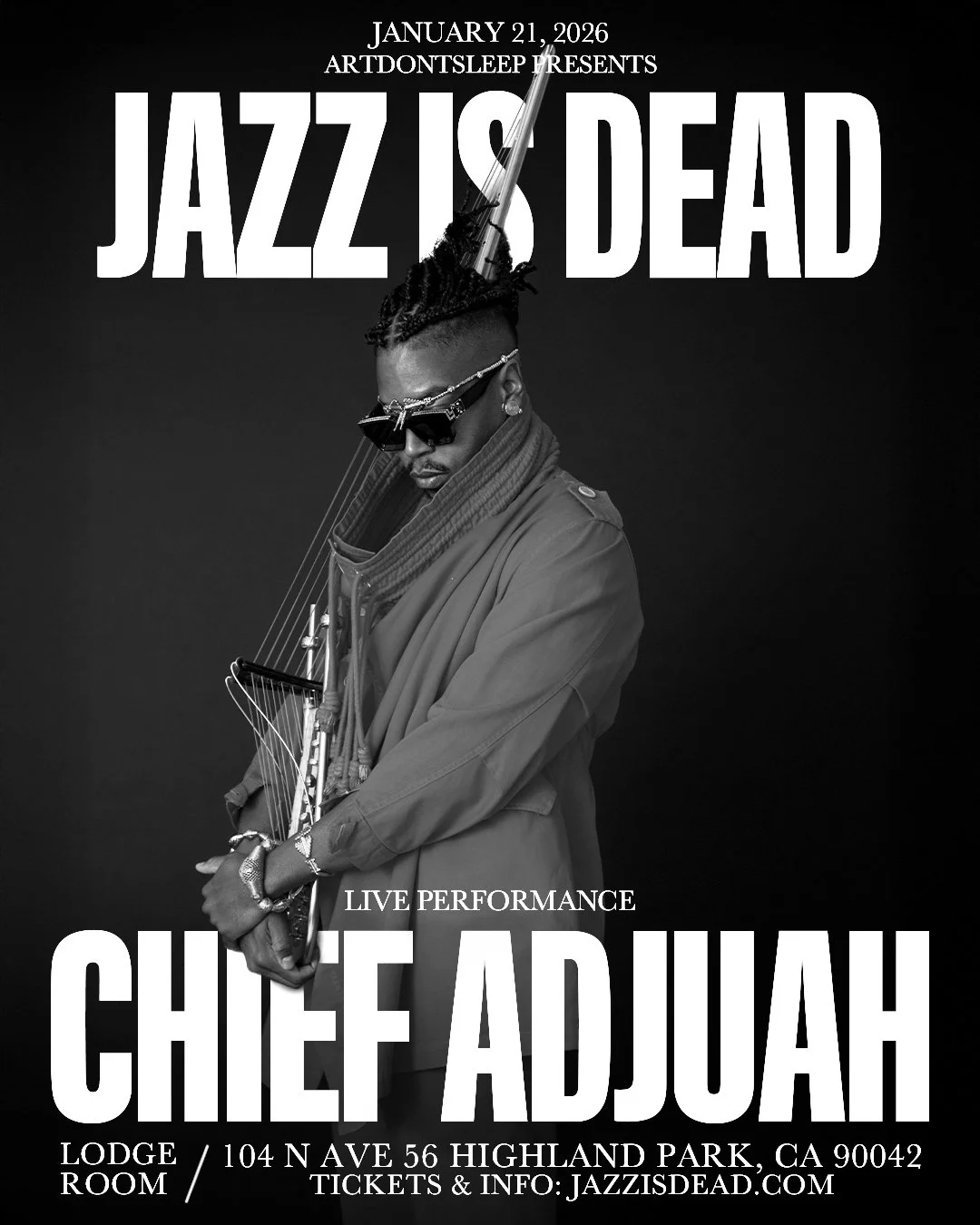
Chief Xian aTunde Adjuah [formerly Christian Scott] is a two-time Edison Award-winning, Doris Duke Award in the Arts winning, six-time Grammy-nominated, sonic architect, multi-instrumentalist, composer, producer, and designer of innovative technologies and musical instruments (like the Stretch Music App, Siren, Sirenette, tilted bell Christian Scott models as well as the Adjuah Trumpet and Chief Adjuah’s Bow). He is the founder and CEO of the Stretch Music app company and record label. Adjuah is Chieftain of the Xodokan Nation, of the Maroon tribes of Afro New Orleans, as well as the current Grand Griot of New Orleans. A direct descendant of New Orleans cultural royalty, He is the grandson of Louisiana luminary and legend, the late Big Chief Donald Harrison Sr., Grand Griot of New Orleans and Guardians Institute founder Herreast Harrison, the nephew of jazz innovator NEA Jazz Master saxophonist-composer, Big Chief Donald Harrison, Jr. Chief Adjuah’s identical twin brother, Kiel Adrian Scott, is an award-winning writer and director, and Spike Lee protege, known for his acclaimed short films and for directing Peabody Award–winning and NAACP Image Award–winning television series. Together, the brothers share a creative mission to elevate cross-cultural storytelling and innovation across music, film, and culture. Since 2002, Adjuah has released fourteen critically acclaimed studio recordings, four live albums, and one greatest hits collection. He is widely recognized as the progenitor of “Stretch Music,”. A 21st-century approach that asserts genre blindness and an ethnomusicological approach to limitless fusion that heralded NPR to hail him as “Ushering in a new era of Jazz" with JazzTimes Magazine marking him as "Jazz's young style God”, “the architect of a commercially viable fusion” and both I-ROCK-JAZZ and AllAboutJazz.com citing him as the “The LeBron James of Jazz”. He has collaborated with Prince, Mos Def (Yasin Bey), Talib Kweli, Thom Yorke, McCoy Tyner, Marcus Miller, Flea, Eddie Palmieri, Robert Glasper, as well as heralded poet and musician Saul Williams. His innovations have garnered him a PBS American Masters, JAZZFM's Innovator of the Year Award, Jazz Journalist Association Trumpeter of the Year, The Herb Alpert Award in the Arts, The Paul Ackett Award, The Echo: Deutscher Musikpreis, The Changing Worlds Peace Maker Award, a host of Downbeat Magazine’s Critics and Readers Poll's wins for Best Composer, Best Trumpeter and Best Electric/Jazz-Rock/Contemporary Group. Induction into the inaugural constituency of the Black Genius Brain Trust, an honor he shares with his Peabody, and NAACP Image award-winning identical twin brother writer-director Kiel Adrian Scott. Recently Adjuah played himself in the hit films Bill and Ted Face the Music and Issa Rae’s The Photograph as well as becoming the face of the first ever BMW XM.