
Can We Separate The Art From The Artist?
Reflecting On The Life Of Willie Cólon
By Leo Moraes
Dear ArtDontSleep Family,
This week, we find ourselves wrestling with ghosts. The ghosts of Willie Colón's decades-long embrace of far-right politics. The ghosts of Charlie Chaplin's young girls. The ghosts of Bob Marley's fists, Miles Davis's temper, and Marvin Gaye's predatory behaviour. We are wrestling with Picasso's narcissism, James Watson's racism, and the uncomfortable truth that the people who move the world forward are often just as broken as the rest of us. Sometimes more so.
The question we're sitting with is simple to ask and impossible to answer definitively: Can we separate the art from the artist?
When we decided to honor Willie Colón following his recent passing, we did so with full awareness of who he was. This wasn't a case of discovering something troubling after the fact. We knew. We knew about his years of far-right advocacy that culminated in MAGA alignment. We knew his politics weren't a recent detour but a lifelong trajectory. And yet, we also knew that "El Gran Varón" gave voice to the AIDS crisis when few would. We knew that "Idilio" had scored countless romances. We knew that his trombone helped define the soundtrack of the diaspora.
We posted anyway, because humans are not one-dimensional, and neither is our relationship to their work.
The replies came quickly. Some thanked us for the tribute. Others pointed to his politics and asked the question we were already asking ourselves: How do we reconcile this? Does knowing who Willie Colón became erase what he gave?
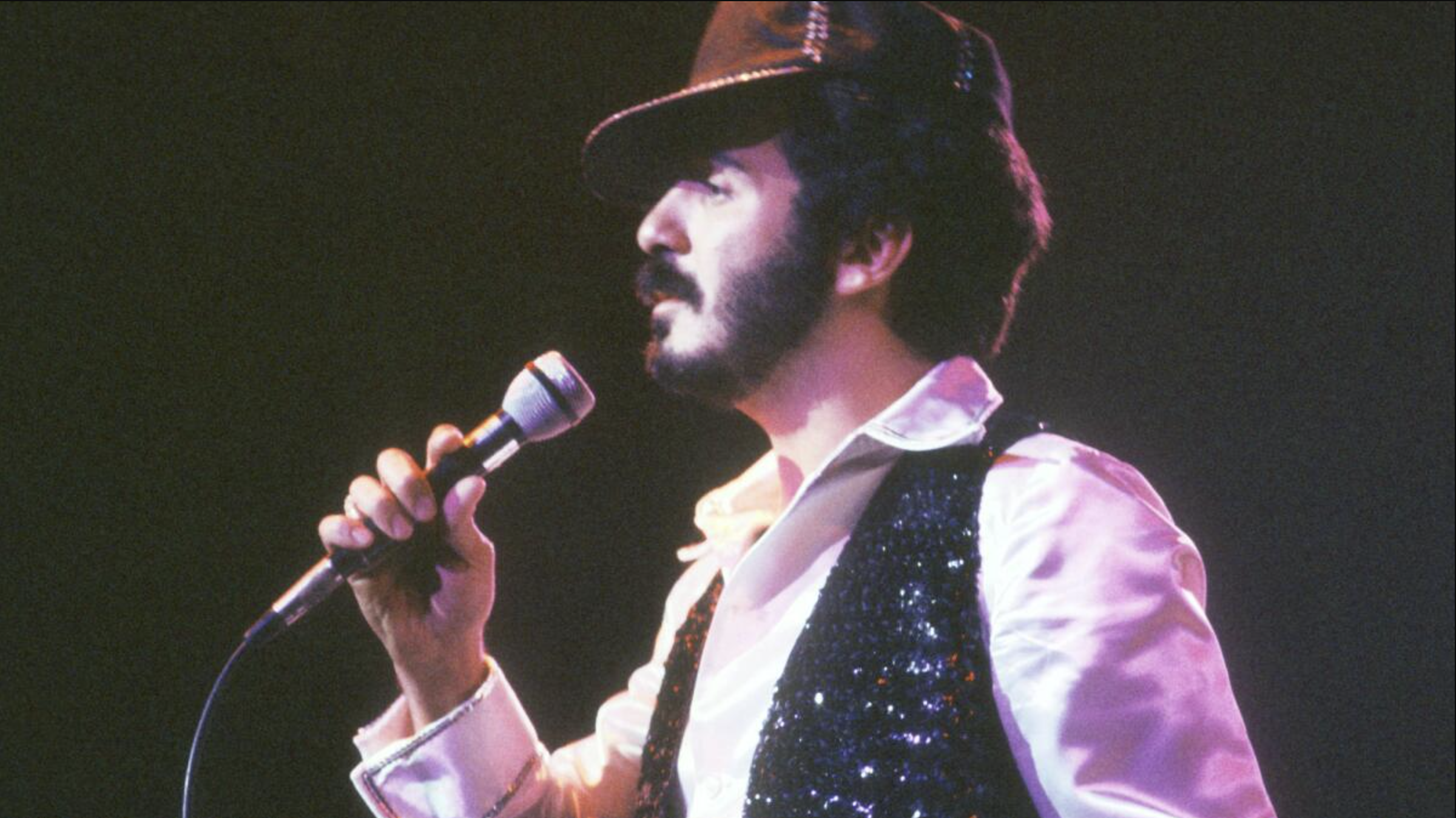
There is no single answer. Art is a conversation between the creator and the consumer, and our politics, ethics, and personal histories are always sitting at the table with us. Some listeners can blast "Idilio" without thinking about Willie Colón's voter registration. For others, knowing his worldview fundamentally breaks the spell of the music. The song ceases to be just a song.
We see this friction everywhere today. When Bad Bunny and Billie Eilish advocate for pro-immigrant policies, they face backlash from those who disagree, proving that support can be withdrawn when politics clash. But what about the inverse? If you agree with an artist's politics, does it make you appreciate their work more? It might. It may create a resonance, a feeling that the person behind the art "gets it," which can deepen the connection.
Then there are artists who make this separation impossible because their politics are the art. Roger Waters, Childish Gambino, and Zack de la Rocha weave their activism into the very fabric of their sound. It is deeply ironic—and frankly, hilarious—when fans tell Zack de la Rocha to "stick to music and stay out of politics." Have they listened to Rage Against the Machine? To ask him to depoliticize his art is to ask him to gut it entirely.
In fact, one could argue that all art is political, even when it tries not to be. The choice to stay silent, or to release something innocuous, is often a political decision in itself. Consider Paul McCartney: after the BBC banned his overtly political single "Give Ireland Back to the Irish," his follow-up was the children's song "Mary Had a Little Lamb." That choice was read by many as a pointed, almost sarcastic response to the censors, proving that you can never truly divorce the art from the context in which it is made.
But politics is just one layer of this onion. The question becomes even thornier when we move from "views" to "behavior."
History is a brutal judge of context. Charlie Chaplin was hounded out of the United States under the specter of communism, and today, we reckon with the fact that his relationships with girls under the age of consent in California, were predatory by any era's standards. Picasso is revered as a titan of modern art, yet his biography is riddled with misogyny and narcissism that left human wreckage in its wake. Bob Marley gave the world anthems of unity and liberation, and he also assaulted his wife. Miles Davis revolutionized jazz not once but twice, and he also beat women. Marvin Gaye's voice defined sensuality for millions, and he pursued underage girls.
Were they products of their time? To an extent, yes. But knowing the pain they caused adds a shadow to the canvas that is hard to ignore.
Humans are not one-dimensional. A person can be a genius and a monster simultaneously. The real challenge lies in whether we, as the audience, have the stomach to compartmentalize. If we apply this standard strictly, we cannot stop at art. Should we disregard the discovery of the structure of DNA because James Watson was a racist? Not to mention using Rosalind Franklin' s data without giving credit. Should we smash our transistors because William Shockley was a proponent of eugenics? The list goes on and on.
If we are to cast aside everyone who has contributed to humanity due to their personal flaws, however grave, we would find ourselves in a world stripped of a lot of beauty, innovation, and progress. It forces us to recognize that the people who move the world forward are often just as messy, contradictory, and broken as the rest of us.
At the risk of sounding mystical, we believe something else is at play here.
Ideas are not our own. They come from somewhere beyond us, a higher place, a collective consciousness, a frequency we can only access when we're open. When an idea's time has come, it demands to be shared. The human at that moment is simply a vessel. A conduit. If one person refuses or fails to share it, the idea will find another. The song wants to be sung. The painting wants to be seen. The poem wants to be read.
This doesn't absolve the vessel of their humanity or their harm. But it suggests that the art is not entirely theirs to begin with. They were just the one who happened to be tuned in when the transmission came through.
So, where does that leave us?
Personally, I believe that context matters, but so does pain. If a specific issue touches you on a personal level, if you are a survivor of abuse, or a member of a community that an artist has publicly denigrated, it is not only valid but it may be necessary to reject that art. Your peace is worth more than a painting or a song.
For me, I have found that death makes it easier. While an artist is alive, consuming their work often feels like an endorsement. It puts money in their pocket, amplifies their platform, and implicitly supports their current existence. But after they are gone, the transaction changes. The art enters the public lexicon, becoming a relic of humanity rather than a paycheck for the artist. At that point, the work can stand alone, separate from the biography of its creator. Or at least, it becomes easier to let it.
We can admire the art and hate the person. We can appreciate the beauty while acknowledging the beast. We can hold two truths at once: that someone gave us something invaluable, and that they took something invaluable from others.
There is no right or wrong answer. There is only the question, echoing back at us every time we press play. We hope you sit with it, and we invite you to share where you stand.
Stay curious, stay complicated