
On Streets, Song, and the Soul of Community
The Corner That Became a Chorus
There is a corner in Belo Horizonte where the mundane met the monumental. Where Rua Divinópolis meets Rua Paraisópolis, in the neighborhood of Santa Tereza, the pavement is unremarkable, the buildings familiar. In the late 1960s, it was simply a place to linger. A group of friends would gather there, with their youthful dreams and hopes. They’d sit on the curb, talk of poetry and politics, strum guitars, and pass around bottles of wine. They called their informal gathering Clube da Esquina: the “Corner Club.” From this ordinary act of hanging out, a sound was born: the Clube da Esquina musical movement, one of Brasil’s most profound and influential artistic treasures, a lush, poetic tapestry that wove bossa nova, rock, and Baroque influences into the very fabric of the nation’s soul.
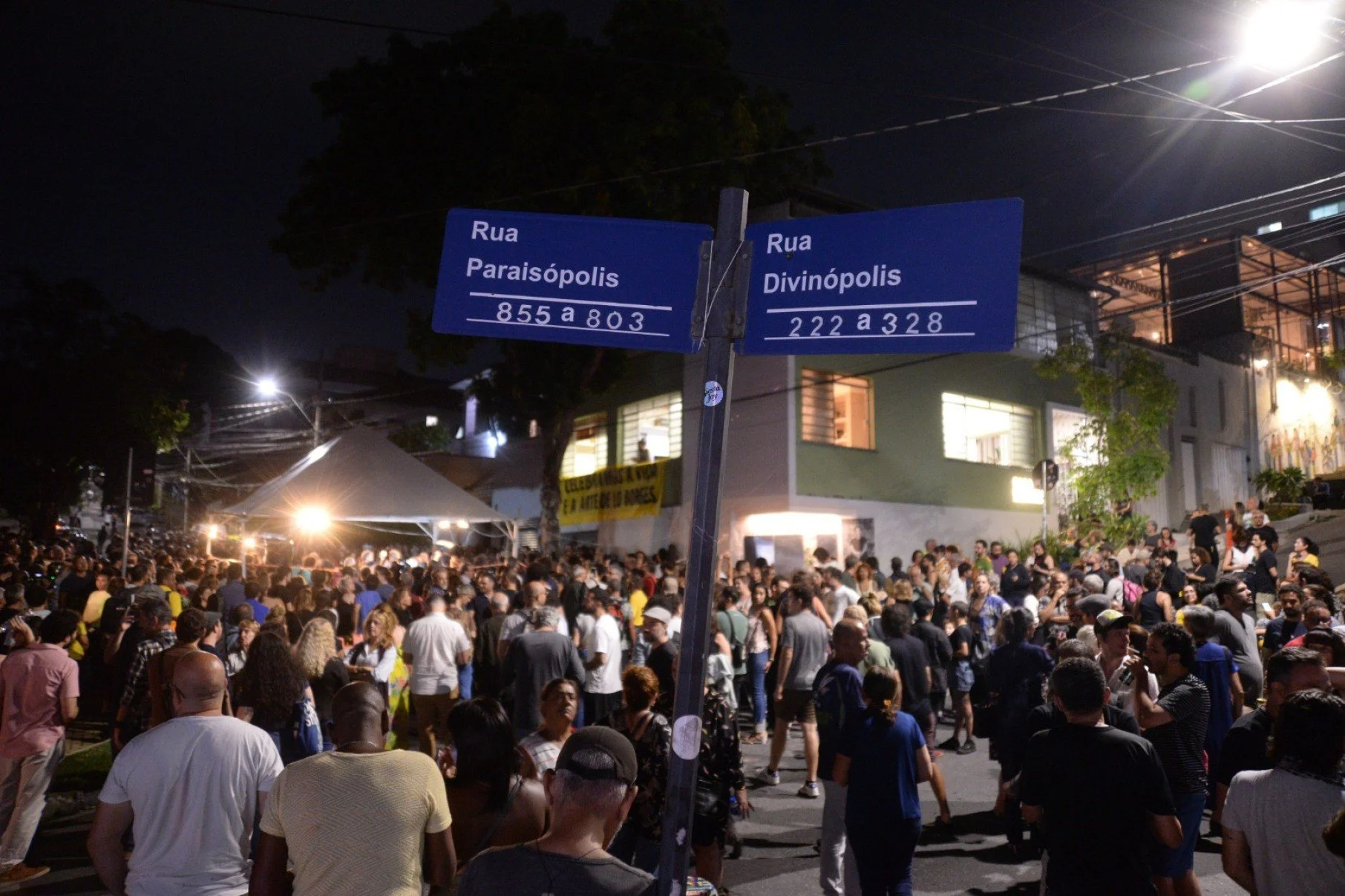
On the corner where it all began, thousands paid tribute to Lô Borges on the night of his passing
For decades, the corner returned to quiet. A historical plaque, a memory. Then, on November 3rd, 2025, the day after the movement’s gentle giant, Lô Borges, passed away, something ancient and spontaneous reawakened. His friends and fellow musicians, armed with nothing but grief, love, and guitars, improvised a stage on that same pavement. They began to play his countless classics. And then, a miracle of public gathering: from the surrounding streets, in apartments and bars, people emerged. Thousands filled the intersection, not as an audience, but as a congregation. They sang every word, in unison, a choked-up, powerful chorus under the open sky. It was a collective wake, a celebration, a reclaiming. And it didn’t stop. Every weekend since, musicians have returned. A small PA appears, cords are run from a nearby shop, and the corner is once again a venue, a living, breathing testament to the art born from simply being together in public.
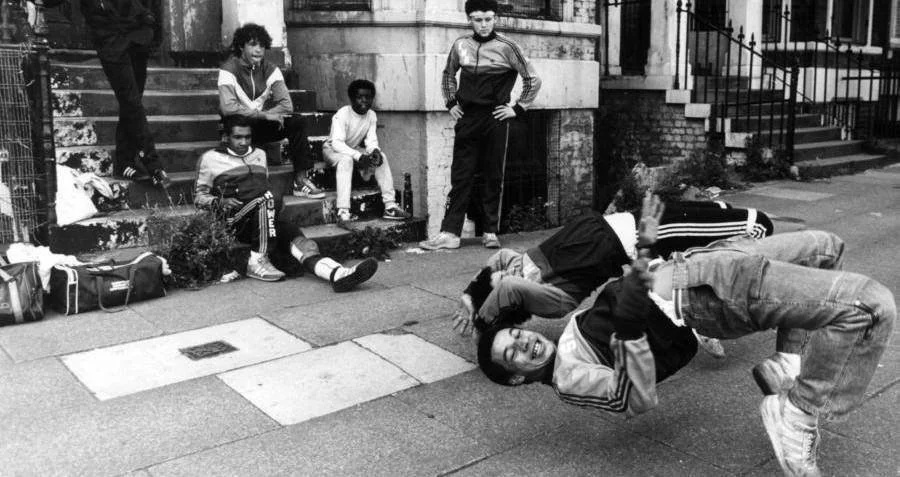
This is the alchemy of the street. It is in these unplanned, unzoned, unpermitted spaces, in the act of loitering with intent, with a dream, with an instrument, that movements are seeded. To “loiter” is framed as a crime, an idleness. But for the creative and the conscious, it is the essential incubation period. It is the space where ideas cross-pollinate, where rhythms are traded, where a shared gaze at a neighborhood’s beauty or injustice sparks a collective response. Occupying the streets, especially for the young, is the most fundamental way to connect to a city’s true rhythm and to your neighbors’ hearts.
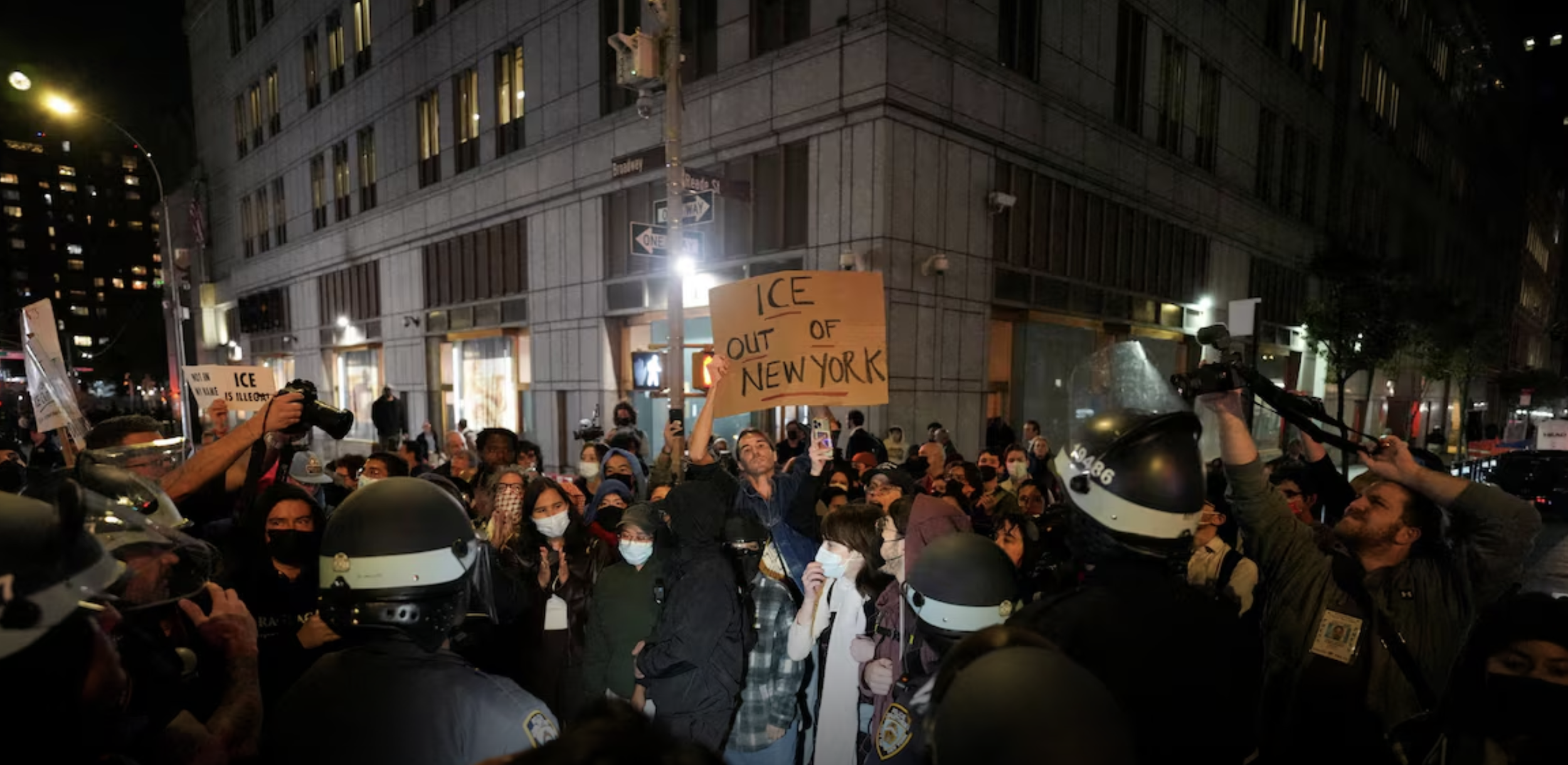
On a NYC corner, thousands gather to support their community
And in times when fear seeks to isolate and divide—when the threat of a raid, of a knock on the door, can force a community into the shadows—this public gathering becomes an act of profound defiance and protection. The shared song on a street corner is a sonic shield; the visible, joyful, determined congregation is a declaration that we see each other, we know each other, and we will not be made to disappear. The community formed in open air is the very antithesis of the cold, anonymous van. It says: Here, we are present. Here, we belong. Here, we are a chorus too large to silence.
History sings this truth in a global key. In the South Bronx of the 1970s, block parties and park jams turned street-corner battles into breakbeats, graffiti into galleries, and spoken-word boasts into a global linguistic revolution called hip-hop—a Black and Latino creation born from occupying abandoned spaces with sound systems and soul. In the townships of apartheid South Africa, the street became the stage for Isicathamiya and Mbaqanga; the harmonies of Ladysmith Black Mambazo and the rhythms of Miriam Makeba were forged in communal resistance, their very vibrations a map of community and a tool for liberation. In Jamaica, the sound system dance, held in open yards and streets, was the crucible for dub, rocksteady, and reggae, where the DJ was a folk poet and the bassline a heartbeat for the dispossessed.
These are not mere concerts. They are the physical manifestation of a shared spirit. The corner, the block, the square are our first and most democratic venues. They demand no ticket, recognize no VIP section. They tell us that the culture does not belong in sealed boxes, but flows through the arteries of the city itself, waiting for a gathering to give it voice.
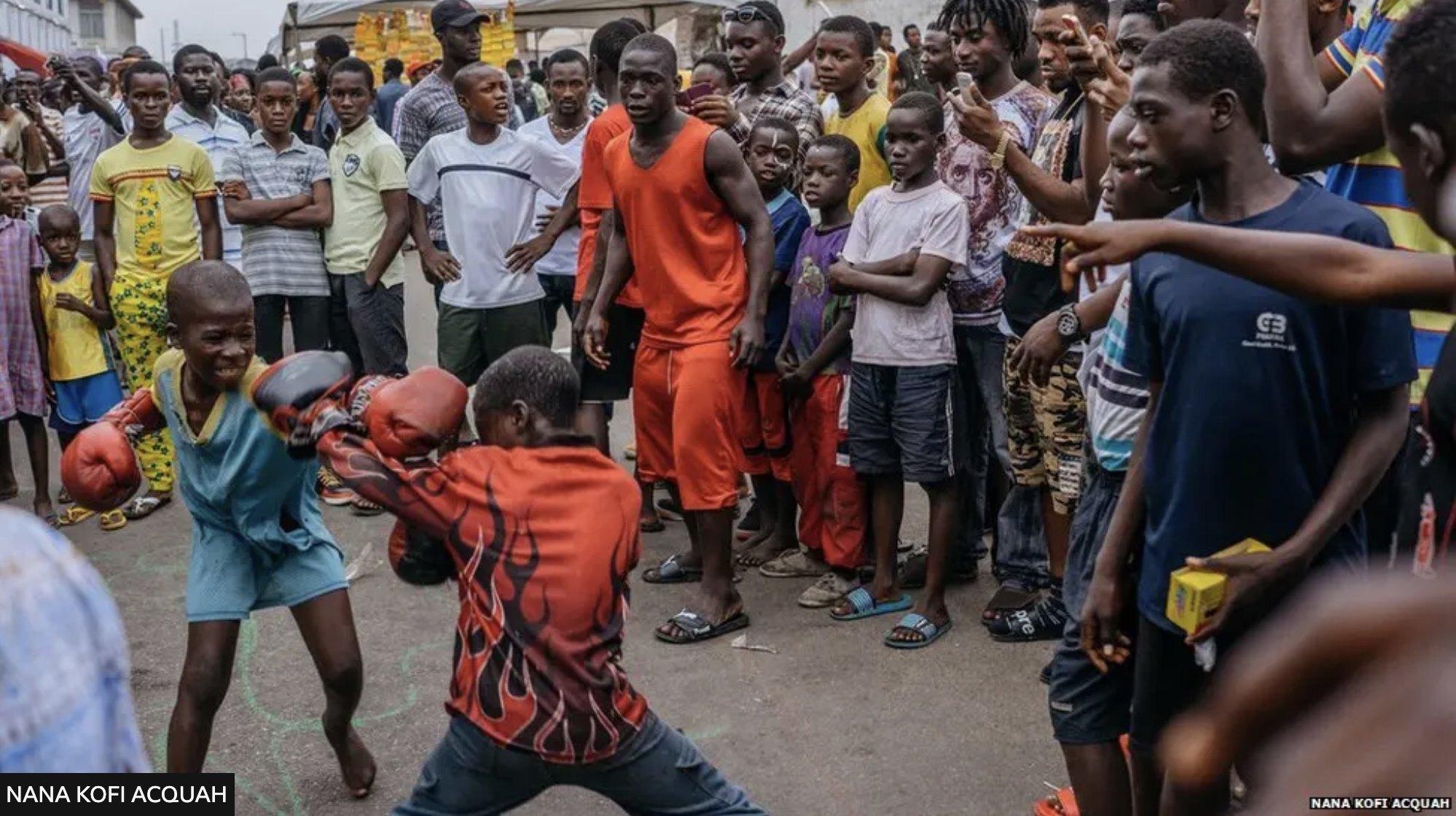
In James Town, Ghana, music and fighting are learned on the streets
So, to the youth with a melody in your pocket, a verse in your notebook, or a fire in your belly: take to the street. Claim your corner. Your esquina. Gather without permission. Sing, play, paint, debate. Be ultra-local. Study the light on your own sidewalk, listen to the stories of your own neighbors. The task is not merely to live in the city, but to live the city itself, to feel its textures as your own skin, to let its rhythms become your pulse. For it is in the deeply specific, the name of a local street, the particular worry in a neighbor’s eye, the collective breath held during uncertain times, that universal resonance is found. Lô and his friends sang of their corner, their bus rides, their Minas Gerais hills, and in doing so, they spoke to the world.
The most profound revolutions are not announced from on high. They are hummed first on a curb, harmonized on a stoop, and shouted from an open window until the whole block joins in. They begin when we stop just passing through and start truly inhabiting, when we become, together, the living, breathing, singing entity that is the city itself. That chorus can be a sanctuary. That chorus can change everything. Start where you stand. The street is waiting.
RESONANCES
Five Centuries of the Pillage of a Continent by Eduardo Galeano
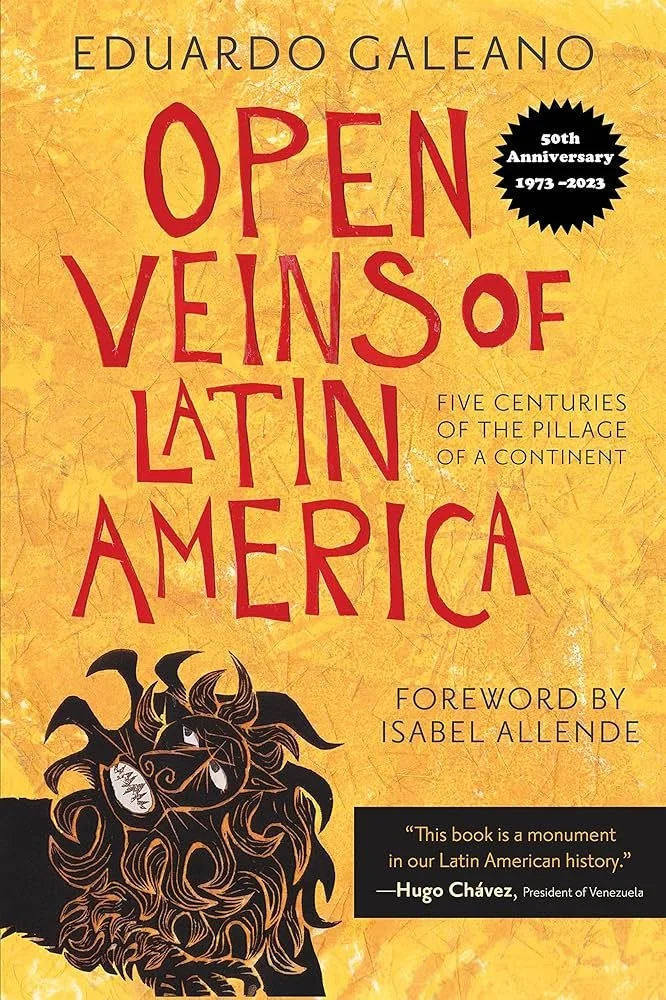
While our article sings of the beauty and power born from Latin American streets, Eduardo Galeano’s seminal work provides the essential, haunting bassline to that melody. Open Veins is not merely a history book; it is a poetic and unflinching chronicle of extraction, of silver, sugar, rubber, and blood, that shaped the continent's profound social landscapes. It maps the historical forces of displacement and exploitation that have, for centuries, sought to silence communities and sever people from their land and each other.
The connection to our theme is profound. The same streets that give us Clube da Esquina, cumbia, and hip-hop are also spaces where the long shadow of this history is contested daily. In our current moment, where policies like ICE raids aim to fracture communities and instill fear, Galeano’s work is a crucial reminder. It illuminates why the act of gathering publicly, of claiming a corner with joy and solidarity, is not just cultural, but a deeply political act of presence and memory. It is a refusal of the forces that have always sought to render people invisible and disposable. Reading Open Veins fortifies our understanding of why the communal song on the street corner is, in itself, a powerful form of testimony and resistance.