
Build it, Book them, Light the Spark
Why live music will always outlive the industry built around it
As we arrive at the final ArtDontSleep newsletter of the year, it feels right to pause, not to slow down, but to take stock. To look back at the rooms that were built, the risks that were taken, and the moments where people chose presence over convenience. This last dispatch isn’t about numbers or trends; it’s about the stubborn, necessary magic of showing up. About why, in a world that keeps accelerating toward the virtual, we still gather in real spaces, with real people, to experience something that can only exist there.
The live music industry is, by any measurable standard, a behemoth. Stadium tours gross billions. Ticketing platforms resemble financial institutions. Corporate sponsors wrap festivals in logos large enough to be seen from space. And yet, somehow, the most vital, future-facing live music experiences are still born the same way they always have been: by a few people deciding that something needs to exist, even if the resources don’t.
There’s a persistent myth that scale creates innovation. Live music history tells the opposite story. The most meaningful festivals, venues, and concert series often begin not with capital, but with conviction. A borrowed PA. A rented room. A DIY flyer. A belief that if the space is built with intention, the people will find it.
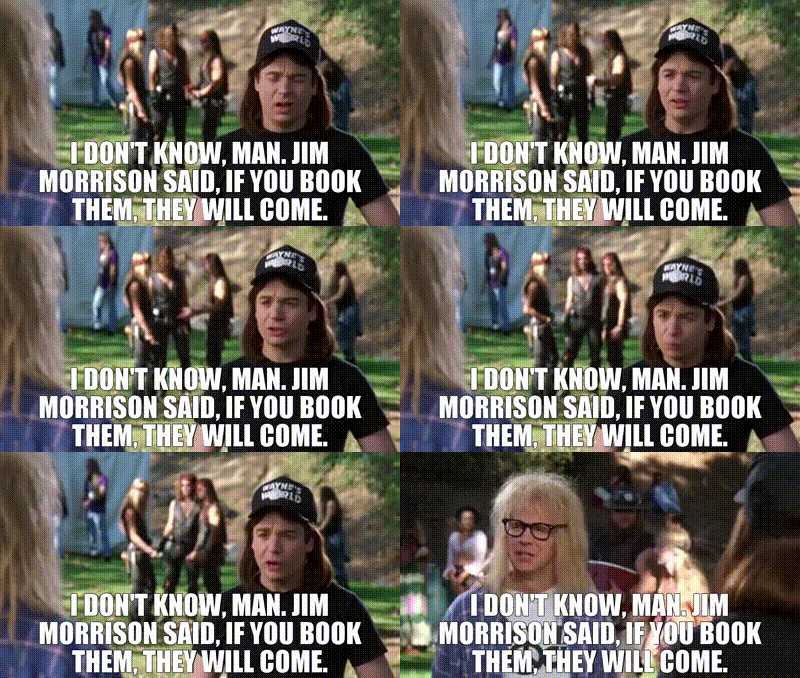
As Field of Dreams famously promised, “If you build it, they will come.” Wayne’s World, with perfect comic clarity, adapted the same logic for music obsessives everywhere: “If you book them, they will come.” Both lines are jokes, until they aren’t. Because over and over again, that’s exactly what happens.
Think of the first shows in nontraditional spaces: lofts, basements, repurposed warehouses, backyards. Think of early jazz loft concerts in New York, thrown because clubs wouldn’t book the music. Think of punk shows in community halls because no venue would touch the sound or the attitude. And think of Casa do Mancha in São Paulo, which didn’t start as a venue at all. It began as parties at Mancha’s own home. Nights where his band and his friends’ bands would play simply because there was a room, a system, and people who wanted to be there. The gatherings became so frequent, and the energy so undeniable, that the house slowly transformed into a venue. Eventually, artists who could easily headline much larger rooms wanted to play there, not for the money or the scale, but because it was cool, alive, and real.
These weren’t business plans. They were acts of necessity.
One promoter books a band they love, knowing full well they will lose money. Another converts an empty storefront into a temporary venue for one weekend. A collective pulls together folding chairs, extension cords, and friends to staff the door. What they lack in infrastructure, they compensate for with taste, trust, and urgency. The audience feels it immediately. The room feels alive because it had to exist.
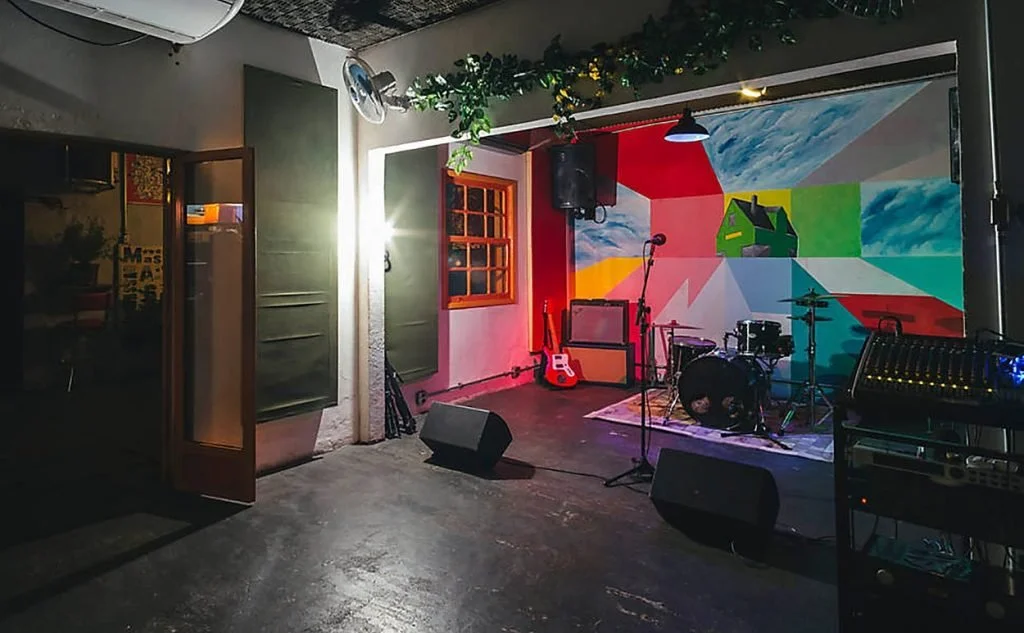
The legendary living room stage at Casa do Mancha
Ironically, even as live music has become a multi-billion-dollar global industry, the cutting edge still lives at this human scale. That’s where risks can be taken. That’s where new scenes form. That’s where artists can fail safely, experiment freely, and connect directly with people who are listening, not just consuming.
The pandemic made this truth impossible to ignore. When live music was prohibited, artists and audiences turned to technology. Livestreams flooded the internet. “Lives” became a daily ritual. For a moment, it felt like the future had arrived early.
And yet, something crucial was missing.
What those long months ultimately proved wasn’t the power of streaming, it was its limit. No matter how high the resolution or how pristine the audio, the experience of being in the same room with an artist and other human beings could not be replicated. The shared silence before the first note. The collective gasp when something unexpected happens. The way energy moves through bodies, not bandwidth.
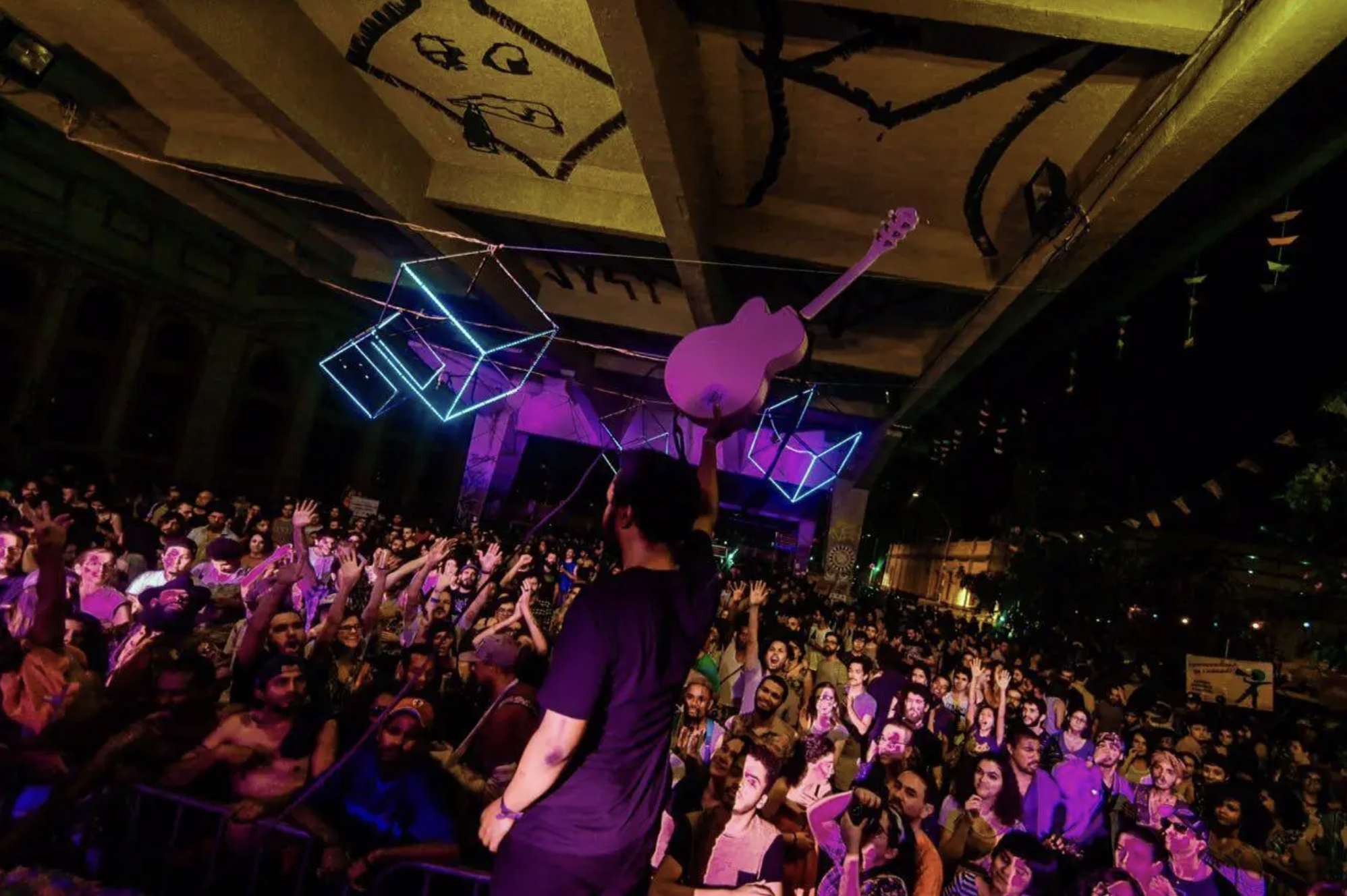
A festival with an improvised stage under a bridge, in Brasil
Technology will continue to reshape nearly every aspect of the music industry: how music is made, distributed, discovered, monetized. But live music remains stubbornly physical. It resists abstraction. It demands presence. And that’s precisely why it endures.
The DIY spirit understands this intuitively. It doesn’t chase perfection. It chases moments. It knows that a show with a slightly broken mic but a fully engaged room will always beat a flawless stream watched alone. It knows that the magic doesn’t come from production value. It comes from people deciding to show up.
This is why live music events matter beyond entertainment. They are excuses: beautiful, necessary excuses to gather. To celebrate life. To protest injustice. To mourn, to dance, to remember, to imagine. They create temporary communities bound by sound and time. For a few hours, strangers become something closer to a collective.
In an increasingly fragmented world, that’s not trivial. It’s radical.
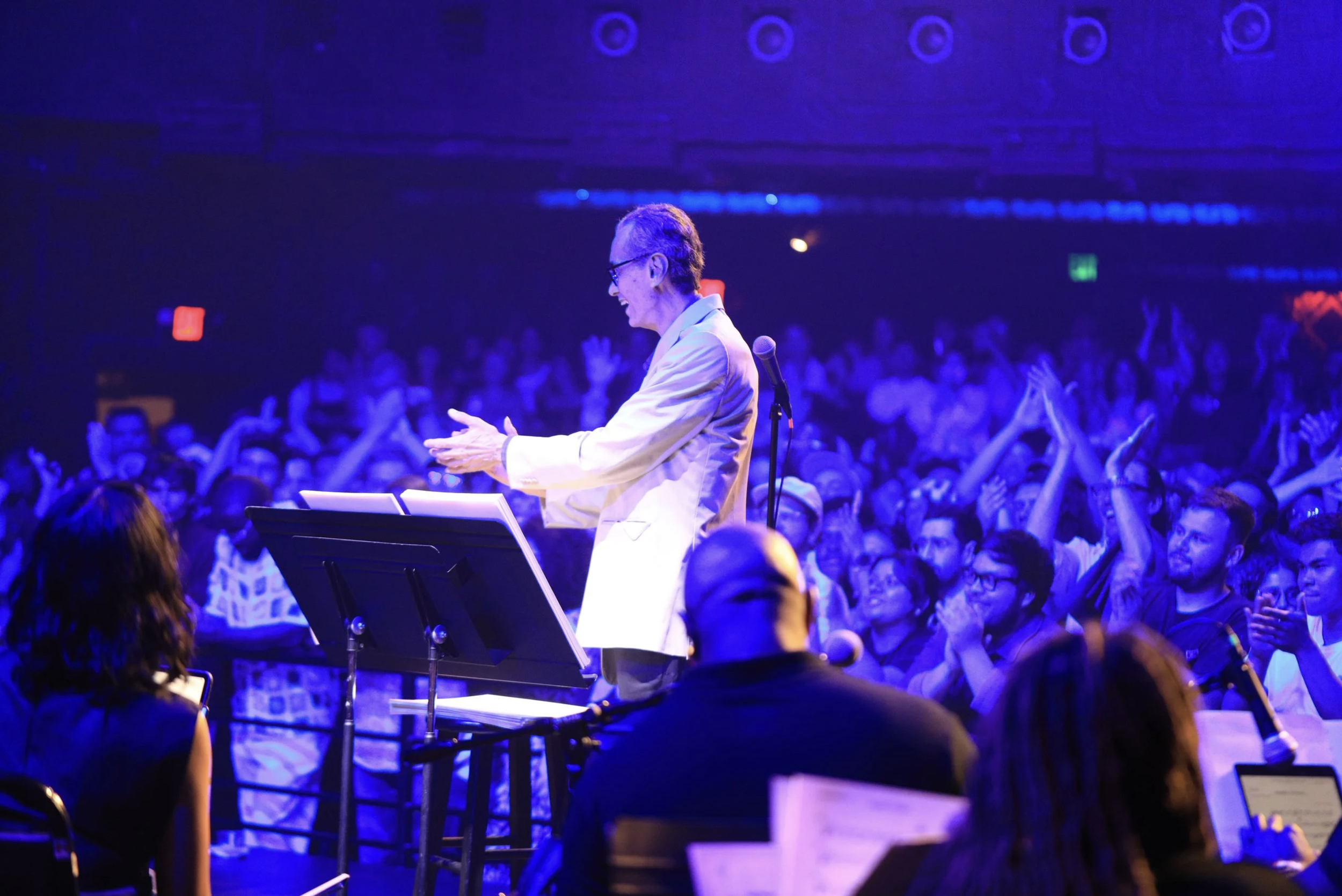
Booking artists because we want to see them. Arthur Verocai @ Jazz Is Dead
So whether it’s a living room that turns into a venue, a small festival started by friends, or a one-off concert thrown because someone believed it needed to happen, the equation remains the same. Build the room. Book the band. Trust the instinct.
If you build it, they will come.
If you book them, they will come.
And when they do, something far bigger than a concert happens: people come together. And that’s the part no technology can ever replace.